

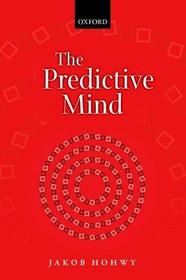
The Predictive Mind
- Publisher's listprice GBP 38.49
-
17 378 Ft (16 550 Ft + 5% VAT)
The price is estimated because at the time of ordering we do not know what conversion rates will apply to HUF / product currency when the book arrives. In case HUF is weaker, the price increases slightly, in case HUF is stronger, the price goes lower slightly.
- Discount 10% (cc. 1 738 Ft off)
- Discounted price 15 640 Ft (14 895 Ft + 5% VAT)
Subcribe now and take benefit of a favourable price.
Subscribe
17 378 Ft

Availability
printed on demand
Why don't you give exact delivery time?
Delivery time is estimated on our previous experiences. We give estimations only, because we order from outside Hungary, and the delivery time mainly depends on how quickly the publisher supplies the book. Faster or slower deliveries both happen, but we do our best to supply as quickly as possible.
Product details:
- Publisher OUP Oxford
- Date of Publication 28 November 2013
- ISBN 9780199686735
- Binding Paperback
- No. of pages294 pages
- Size 233x157x17 mm
- Weight 454 g
- Language English 0
Categories
Short description:
Jakob Hohwy explores a new theory in neuroscience: the idea that the brain is essentially a hypothesis-testing mechanism that attempts to minimise the error of its predictions about sensory input. He explains the rich and multifaceted character of our conscious perception, and argues that the mind has a fragile, indirect relation to the world.
MoreLong description:
A new theory is taking hold in neuroscience. It is the theory that the brain is essentially a hypothesis-testing mechanism, one that attempts to minimise the error of its predictions about the sensory input it receives from the world. It is an attractive theory because powerful theoretical arguments support it, and yet it is at heart stunningly simple. Jakob Hohwy explains and explores this theory from the perspective of cognitive science and philosophy. The key argument throughout The Predictive Mind is that the mechanism explains the rich, deep, and multifaceted character of our conscious perception. It also gives a unified account of how perception is sculpted by attention, and how it depends on action. The mind is revealed as having a fragile and indirect relation to the world. Though we are deeply in tune with the world we are also strangely distanced from it.
The first part of the book sets out how the theory enables rich, layered perception. The theory's probabilistic and statistical foundations are explained using examples from empirical research and analogies to different forms of inference. The second part uses the simple mechanism in an explanation of problematic cases of how we manage to represent, and sometimes misrepresent, the world in health as well as in mental illness. The third part looks into the mind, and shows how the theory accounts for attention, conscious unity, introspection, self and the privacy of our mental world.
How does your brain generate accurate perceptual experiences? How does it initiate action? How does it do virtually everything else it does? Jakob Hohwy's book provides an ambitious, controversial answer ... I predict that Hohwy's book will be an important part of the discussion.
Table of Contents:
Preface
Introduction
Part I: The Mechanism
Perception as causal inference
Prediction error minimisation
Prediction error, context, and precision
Action and expected experience
Part II: The World
Binding is inference
Is predicting seeing?
Precarious prediction
Surprise and misrepresentation
Part III: The Mind
Precision, attention, and consciousness
Perceptual unity in action
The fragile mirror of nature
Into the predictive mind
Concluding remarks: The mind in prediction
Acknowledgements
Bibliography
Index

