

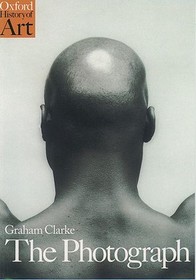
- Publisher's listprice GBP 24.49
-
11 057 Ft (10 530 Ft + 5% VAT)
The price is estimated because at the time of ordering we do not know what conversion rates will apply to HUF / product currency when the book arrives. In case HUF is weaker, the price increases slightly, in case HUF is stronger, the price goes lower slightly.
- Discount 10% (cc. 1 106 Ft off)
- Discounted price 9 951 Ft (9 477 Ft + 5% VAT)
Subcribe now and take benefit of a favourable price.
Subscribe
11 057 Ft

Availability
printed on demand
Why don't you give exact delivery time?
Delivery time is estimated on our previous experiences. We give estimations only, because we order from outside Hungary, and the delivery time mainly depends on how quickly the publisher supplies the book. Faster or slower deliveries both happen, but we do our best to supply as quickly as possible.
Product details:
- Publisher OUP Oxford
- Date of Publication 10 April 1997
- ISBN 9780192842008
- Binding Paperback
- No. of pages248 pages
- Size 238x168x15 mm
- Weight 583 g
- Language English
- Illustrations colour and black and white halftones throughout 0
Categories
Short description:
How do we read a photograph? Graham Clarke gives a clear and incisive account of the photograph's historical development from Joseph Nicéphore Niépce's early `heliograph' to the classic compositions of Cartier-Bresson and Alfred Steiglitz, to the striking post-modern strategies of Robert Mapplethorpe, Cindy Sherman, and Victor Burgin. This book is a ground-breaking examination of the main subject areas - landscape, the city, portraiture, the body, and reportage - with detailed analysis of exemplary images in terms of their cultural and ideological contexts.
MoreLong description:
From the first misty `heliograph' taken by Joseph Nicephore Niepce in 1826 to the classic compositions of Cartier-Bresson and Alfred Steiglitz, to the striking postmodern strategies of Robert Mapplethorpe, Cindy Sherman and Victor Burgin, the history of photography is a record of dazzling and penetrating images. But photographs are also the most pervasive images of our time, infinite in their capacity to record and make moments significant, granting status to everything they touch.
So how do we read a photograph? In a series of brilliant discussions of major themes and genres, Graham Clarke gives a clear and incisive account of the photograph's historical development, and elucidates the insights of the most interesting thinkers on the subject such as Roland Barthes and Susan Sontag. At the heart of the book is his ground-breaking examination of the main subject areas - landscape, the city, portraiture, the body, and reportage - and his detailed analysis of exemplary images in terms of their cultural and ideological contexts.
A readable text discusses the way in which we see and interpret photographs.

