

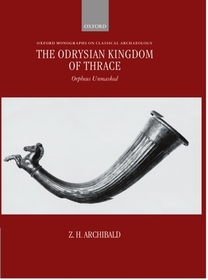
- Publisher's listprice GBP 317.50
-
143 351 Ft (136 525 Ft + 5% VAT)
The price is estimated because at the time of ordering we do not know what conversion rates will apply to HUF / product currency when the book arrives. In case HUF is weaker, the price increases slightly, in case HUF is stronger, the price goes lower slightly.
- Discount 10% (cc. 14 335 Ft off)
- Discounted price 129 016 Ft (122 873 Ft + 5% VAT)
Subcribe now and take benefit of a favourable price.
Subscribe
143 351 Ft

Availability
printed on demand
Why don't you give exact delivery time?
Delivery time is estimated on our previous experiences. We give estimations only, because we order from outside Hungary, and the delivery time mainly depends on how quickly the publisher supplies the book. Faster or slower deliveries both happen, but we do our best to supply as quickly as possible.
Product details:
- Publisher OUP Oxford
- Date of Publication 29 January 1998
- ISBN 9780198150473
- Binding Hardback
- No. of pages394 pages
- Size 285x225x30 mm
- Weight 1123 g
- Language English
- Illustrations 24 pp plates, line figures, maps, tables 0
Categories
Short description:
Who were the silver-clad horsemen whose rich tombs have been discovered in Bulgaria and North Aegean Greece? This book sets out to show that they belonged to the Odrysians, a tribal dynasty which created a kingdom in the fifth century BC, powerful enough to challenge the Greek states and Macedon. A wealth of archaeological material is made available for the first time in this schoarly presentation.
MoreLong description:
Spectacular archaeological discoveries were made during the 1970s and 1980s in Bulgaria and North Aegean Greece which sparked international interest in the forgotten Odrysian kingdom of Thrace. Here, for the first time, these and earlier discoveries are presented in their archaeological and historical context. The Thracians were the fabulously wealthy and populous neighbours of the ancient Greeks, whose golden age began in the fifth century BC when an inter-tribal state was created by the ruling dynasty of the tribe - the Odrysians. A vogue in the Greek world for Orpheus the Thracian coincided with the period of the Odrysians's greatest prominence. Not only does this book analyse the fascinating cultural amalgam of native, Persian, and Greek elements by the Odrysian governing elite, it also provides new data on the external relations of Athens, Thasos, and Macedon in the classical and early Hellenistic periods.
The gazetteer of archaeological sites is extremely useful for those who are unfamiliar with the region. One aspect of the book deserves a particular mention: it is full of maps and plans, and these provide almost as much important information as the text itself. Without doubt, the book is a great achievement for both the author and for Thracian studies as a whole. This is a book with nearly everything.

