

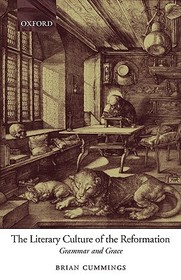
The Literary Culture of the Reformation
Grammar and Grace
- Publisher's listprice GBP 67.00
-
30 250 Ft (28 810 Ft + 5% VAT)
The price is estimated because at the time of ordering we do not know what conversion rates will apply to HUF / product currency when the book arrives. In case HUF is weaker, the price increases slightly, in case HUF is stronger, the price goes lower slightly.
- Discount 10% (cc. 3 025 Ft off)
- Discounted price 27 225 Ft (25 929 Ft + 5% VAT)
Subcribe now and take benefit of a favourable price.
Subscribe
30 250 Ft

Availability
printed on demand
Why don't you give exact delivery time?
Delivery time is estimated on our previous experiences. We give estimations only, because we order from outside Hungary, and the delivery time mainly depends on how quickly the publisher supplies the book. Faster or slower deliveries both happen, but we do our best to supply as quickly as possible.
Product details:
- Edition number New ed
- Publisher OUP Oxford
- Date of Publication 19 July 2007
- ISBN 9780199226337
- Binding Paperback
- No. of pages490 pages
- Size 215x137x25 mm
- Weight 606 g
- Language English
- Illustrations 6 halftones 0
Categories
Short description:
Brian Cummings examines the place of literature in the Reformation, considering how arguments about biblical meaning and literary interpretation influenced the new theology, and how developments in theology in turn influenced literary practices. Bringing together genres and styles of writing which are normally kept apart (poems, sermons, treatises, commentaries), he offers a major re-evaluation of the literary production of this intensely verbal and controversial period.
MoreLong description:
Brian Cummings examines the place of literature in the Reformation, considering both how arguments about biblical meaning and literary interpretation influenced the new theology, and how developments in theology in turn influenced literary practices. Part One focuses on Northern Europe, reconsidering the relationship between Renaissance humanism (especially Erasmus) and religious ideas (especially Luther). Parts Two and Three examine Tudor and early Stuart England. Part Two describes the rise of vernacular theology and protestant culture in relation to fundamental changes in the understanding of the English language. Part Three studies English religious poetry (including Donne, Herbert, and in an Epilogue, Milton) in the wake of these changes. Bringing together genres and styles of writing which are normally kept apart (poems, sermons, treatises, commentaries), Cummings offers a major re-evaluation of the literary production of this intensely verbal and controversial period.
Review from previous edition I cannot think of a book more keenly aware of the linguistic complexities of early modern texts and of their political implications.
Table of Contents:
Note to the Reader
Abbreviations
Prologue: The Reformation and Literary Culture
I. Humanism and Theology in Northern Europe 1512-1527
The Reformation of the Reader
New Grammar and New Theology
Erasmus contra Luther
II. The English Language and the English Reformations 1521-1603
Vernacular Theology
Protestant Culture
III. Literature and the English Reformations 1580-1640
Calvinist and Anti-Calvinist
Recusant Poetry
God's Grammar
Epilogue: Revolutionary English
Primary Sources
Secondary Sources
Index

