

- Publisher's listprice GBP 54.99
-
24 827 Ft (23 645 Ft + 5% VAT)
The price is estimated because at the time of ordering we do not know what conversion rates will apply to HUF / product currency when the book arrives. In case HUF is weaker, the price increases slightly, in case HUF is stronger, the price goes lower slightly.
- Discount 20% (cc. 4 965 Ft off)
- Discounted price 19 862 Ft (18 916 Ft + 5% VAT)
- Discount is valid until: 30 June 2026
Subcribe now and take benefit of a favourable price.
Subscribe
24 827 Ft

Availability
printed on demand
Why don't you give exact delivery time?
Delivery time is estimated on our previous experiences. We give estimations only, because we order from outside Hungary, and the delivery time mainly depends on how quickly the publisher supplies the book. Faster or slower deliveries both happen, but we do our best to supply as quickly as possible.
Product details:
- Edition number Reprint
- Publisher Bloomsbury Publishing (UK)
- Date of Publication 6 May 2008
- Number of Volumes Paperback
- ISBN 9780739113493
- Binding Paperback
- No. of pages350 pages
- Size 230.12x153.16x25.908 mm
- Weight 517 g
- Language English 60
Categories
Long description:
"
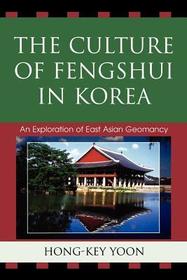
The term Fengshui, which literally means 'wind and water,' is the ancient Chinese art of selecting an auspicious site to provide the most harmonious relationship between human and earth. The term is generally translated as ""geomancy,"" and has had a deep and extensive impact on Korean, Chinese, and other East Asian cultures. Hong-key Yoon's book explores the nature of geomantic principles and the culture of practicing them in Korean cultural contexts.
Yoon first examines the nature and historical background of geomancy, geomantic principles for auspicious sites (houses, graves, and cities) and provides an interpretation of geomantic principles as practiced in Korea. Yoon looks at geomancy's influence on cartography, religion and philosophy, and urban development in both Korea and China. Finally, Yoon debates the role of geomancy in the iconographical warfare between Japanese colonialism and Korean nationalism as it affected the cultural landscape of Kyongbok Palace in Seoul.
Table of Contents:
Chapter 1 Preface
Part 2 Part I: The Nature And Historical Background Of Geomancy
Chapter 3 Chapter 1: Introduction
Chapter 4 Chapter 2: The Origin and Evolution of Geomancy in Korea
Chapter 5 Chapter 3: The Introduction and Development of Geomancy in Korea
Part 6 Part II: Geomantic Principles Into Practice
Chapter 7 Chapter 4: Yin-Yang Theory and Geomancy
Chapter 8 Chapter 5: The Geomantic Principles for and Auspicious Site
Chapter 9 Chapter 6: The Principles of House Geomancy
Chapter 10 Chapter 7: Grave Geomancy Landscape
Chapter 11 Chapter 8: An Interpretation of Geomantic Principles
Chapter 12 Chapter 9: The Cartography of Geomancy
Part 13 Part III: Geomancy And Religion
Chapter 14 Chapter 10: Geomancy's Interaction with Buddhism
Chapter 15 Chapter 11: Confucian Ethos and Geomancy
Part 16 Part IV: Geomancy And Settlement
Chapter 17 Chapter 12: The Use of Geomantic Ideas in Chinese, Japanese, and Korean Cities
Chapter 18 Chapter 13: Seoul: A New Dynasty's Search for an Auspicious Site
Chapter 19 Chapter 14: The Social Construction of Kaesong
Part 20 Part V: Geomancy and Iconography
Chapter 21 Chapter 15: Iconographic Warfare and the Geomantic Landscape of Seoul
Chapter 22 Chapter 16: Conclusion

