

- Publisher's listprice GBP 115.00
-
54 941 Ft (52 325 Ft + 5% VAT)
The price is estimated because at the time of ordering we do not know what conversion rates will apply to HUF / product currency when the book arrives. In case HUF is weaker, the price increases slightly, in case HUF is stronger, the price goes lower slightly.
- Discount 10% (cc. 5 494 Ft off)
- Discounted price 49 447 Ft (47 093 Ft + 5% VAT)
Subcribe now and take benefit of a favourable price.
Subscribe
54 941 Ft

Availability
printed on demand
Why don't you give exact delivery time?
Delivery time is estimated on our previous experiences. We give estimations only, because we order from outside Hungary, and the delivery time mainly depends on how quickly the publisher supplies the book. Faster or slower deliveries both happen, but we do our best to supply as quickly as possible.
Product details:
- Edition number 2
- Publisher OUP Oxford
- Date of Publication 12 May 2016
- ISBN 9780198779698
- Binding Hardback
- No. of pages320 pages
- Size 222x144x23 mm
- Weight 490 g
- Language English 0
Categories
Short description:
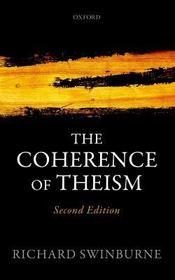
This substantially revised second edition of a classic text in philosophy of religion explores what it means, and whether it is coherent, to say that there is a God. Swinburne takes account of new developments in the debate over the past 40 years, and develops his views on central claims about the nature of God in light of recent discussion.
MoreLong description:
The Coherence of Theism investigates what it means, and whether it is coherent, to say that there is a God. Richard Swinburne concludes that despite philosophical objections, most traditional claims about God are coherent (that is, do not involve contradictions); and although some of the most important claims are coherent only if the words by which they are expressed are being used in analogical senses, this is the way in which theologians have usually claimed that they are being used. When the first edition of this book was published in 1977, it was the first book in the new 'analytic' tradition of philosophy of religion to discuss these issues. Since that time there have been very many books and discussions devoted to them, and this new, substantially rewritten, second edition takes account of these discussions and of new developments in philosophy generally over the past 40 years. These discussions have concerned how to analyse the claim that God is 'omnipotent', whether God can foreknow human free actions, whether God is everlasting or timeless, and what it is for God to be a 'necessary being'. On all these issues this new edition has new things to say.
MoreTable of Contents:
Introduction
Part I. Religious Language
Conditions for Coherence--Logical Possibility
Conditions for Coherence--Metaphysical Possibility
The Words of Theology--(1) Words with Old and New Senses
The Words of Theology--(2) Medieval and Modern Accounts
Attitude Theories
Part II. A Contingent God
An Omnipresent Spirit
Free and Creator of the Universe
Omnipotent
Omniscient
Appendix on Omniscience in the Bible and Christian tradition
Perfectly Good and a Source of Moral Obligation
Eternal and Immutable
Part III. A Necessary God
God's Necessary Properties
A Necessary Being
Holy and Worthy of Worship
Additional Notes
Index

