

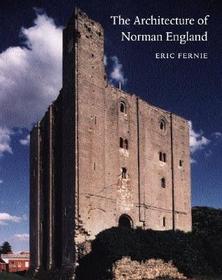
The Architecture of Norman England
- Publisher's listprice GBP 62.00
-
27 993 Ft (26 660 Ft + 5% VAT)
The price is estimated because at the time of ordering we do not know what conversion rates will apply to HUF / product currency when the book arrives. In case HUF is weaker, the price increases slightly, in case HUF is stronger, the price goes lower slightly.
- Discount 10% (cc. 2 799 Ft off)
- Discounted price 25 194 Ft (23 994 Ft + 5% VAT)
Subcribe now and take benefit of a favourable price.
Subscribe
27 993 Ft

Availability
Out of print
Why don't you give exact delivery time?
Delivery time is estimated on our previous experiences. We give estimations only, because we order from outside Hungary, and the delivery time mainly depends on how quickly the publisher supplies the book. Faster or slower deliveries both happen, but we do our best to supply as quickly as possible.
Product details:
- Publisher Oxford University Press
- Date of Publication 20 June 2002
- ISBN 9780199250813
- Binding Paperback
- No. of pages368 pages
- Size 277x220x23 mm
- Weight 894 g
- Language English
- Illustrations numerous halftones and maps and 4pp colour plates 0
Categories
Short description:
This important addition to the literature by Eric Fernie, a recognized authority on the subject, is the first overall study of the architecture of Norman England since Sir Alfred Clapham's English Romanesque Architecture after the Conquest (1934). Containing powerful new ideas which will affect the way in which we look at and analyse these buildings, it discusses and puts into context castles, halls, cathedrals, abbeys, collegiate churches, monastic buildings, parish churches, and
palace chapels, and provides a guide to the parts of the buildings, such as apses, passages, vaults, and galleries, as well as an account of the processes by which the buildings were planned and built.
Long description:
This important addition to the literature is the first overall study of the architecture of Norman England since Sir Alfred Clapham's English Romanesque Architecture after the Conquest (1934). Eric Fernie, a recognized authority on the subject, begins with an overview of the architecture of the period, paying special attention to the importance of the architectural evidence for an understanding of the Norman Conquest. The second part, the core of the book, is an examination of
the buildings defined by their function, as castles, halls, and chamber blocks, cathedrals, abbeys, and collegiate churches, monastic buildings, parish churches, and palace chapels. The third part is a reference guide to the elements which make up the buildings, such as apses, passages, vaults,
galleries, and decorative features, and the fourth offers an account of the processes by which they were planned and constructed. This book contains powerful new ideas that will affect the way in which we look at and analyze these buildings.
A lavishly illustrated, erudite and very readable guide to its subject.
Table of Contents:
PART I: THE PERIOD
The Western European Context from the Fourth Century to the Eleventh
England, 1066 to the late Twelfth Century
PART II: THE BUILDINGS
Castles, Halls, and Chamber Blocks
Cathedrals, Monastic, and Collegiate Churches
Monastic Buildings
Parish Churches
Palace Chapels
PART III: THE ELEMENTS
Elements
PART IV: THE PROCESSES
Planning and Reconstruction
Conclusion
Appendix 1. Dimensions
Appendix 2. Methods
Glossary
Bibliography
Index

