

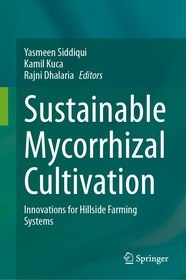
Sustainable Mycorrhizal Cultivation
Innovations for Hillside Farming Systems
- Publisher's listprice EUR 192.59
-
75 225 Ft (71 643 Ft + 5% VAT)
The price is estimated because at the time of ordering we do not know what conversion rates will apply to HUF / product currency when the book arrives. In case HUF is weaker, the price increases slightly, in case HUF is stronger, the price goes lower slightly.
- Discount 20% (cc. 15 045 Ft off)
- Discounted price 60 180 Ft (57 314 Ft + 5% VAT)
- Discount is valid until: 30 June 2026
Subcribe now and take benefit of a favourable price.
Subscribe
66 198 Ft

Availability
printed on demand
Why don't you give exact delivery time?
Delivery time is estimated on our previous experiences. We give estimations only, because we order from outside Hungary, and the delivery time mainly depends on how quickly the publisher supplies the book. Faster or slower deliveries both happen, but we do our best to supply as quickly as possible.
Product details:
- Publisher Springer Nature Singapore
- Date of Publication 11 November 2025
- ISBN 9789819517770
- Binding Hardback
- No. of pages403 pages
- Size 235x155 mm
- Language English
- Illustrations XVIII, 403 p. 20 illus., 18 illus. in color. 653
Categories
Long description:
"
This book explores harnessing mycorrhiza in hilly agriculture and presents innovative strategies for sustainable cultivation. Exploring the symbiotic relationship between plants and mycorrhizal fungi reveals how this partnership can optimize soil health, enhance nutrient uptake, and increase crop resilience in challenging terrains. From understanding the ecological role of mycorrhiza to practical applications in hilly regions, the book highlights the use of mycorrhiza in hill agriculture, including details on mycorrhizal diversity, its impact on hill crops, and how to maintain and promote mycorrhizal diversity for better sustainability and economic viability. By addressing the unique challenges faced by hillside farmers, it aims to improve agricultural practices, mitigate erosion, and promote long-term environmental sustainability.
This book is essential for policymakers seeking sustainable agricultural strategies, researchers exploring beneficial fungi, soil scientists, agronomists, progressive farmers and students pursuing agriculture sciences.
" MoreTable of Contents:
.- Chapter 1: Overview of Hill Agriculture: Challenges, Opportunities, and Sustainability
.- Chapter 2: Agronomic Opportunities to Alter Cropping Systems and Soil Health
.- Chapter 3: Unravelling the Hidden World Beneath: Exploring Mycorrhizal Diversity and Methods of Identification and Isolation
.- Chapter 4: Role of Mycorrhiza and its Application to Crop Production: A Path Ahead for Sustainable Agriculture
.- Chapter 5: Mycorrhizal Influence on Vegetable Crops: Enhancing Productivity and Sustainability
.- Chapter 6: From Root to Fruit: Mycorrhizal Impact on Fruit Crops
.- Chapter 7: Symbiotic Relationships: The Role of Mycorrhizae in Optimizing Flower Crop Productivity
.- Chapter 8: Harnessing Mycorrhizal Symbiosis: Exploring its impact on Medicinal Crops
.- Chapter 9: Rooting for Growth: Mycorrhizal Impact on Forestry Ecosystems
.- Chapter 10:Impact of Mycorrhizal Application on Major Crops such as Cereals, Pulses, and Oilseeds
.- Chapter 11:Cultivating Excellence: Mycorrhizal Fungi Quality Management, Production, and Application
.- Chapter 12:Mechanisms of Mycorrhizal Symbiosis and its Impact on Soil Fertility and Crop Nutrition
.- Chapter 13:Economic Analysis of Mycorrhizal Applications and their Potential for Enhancing Farm Profitability and Livelihoods
.- Chapter 14:Environmental Benefits of Mycorrhizal Symbiosis: Soil Conservation, Biodiversity Conservation, and Climate Change Mitigation
.- Chapter 15:Market avenues and the availability of mycorrhizal products for use in agriculture by farmers.

