

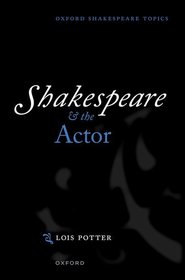
Shakespeare and the Actor
Series: Oxford Shakespeare Topics;
- Publisher's listprice GBP 20.99
-
9 476 Ft (9 025 Ft + 5% VAT)
The price is estimated because at the time of ordering we do not know what conversion rates will apply to HUF / product currency when the book arrives. In case HUF is weaker, the price increases slightly, in case HUF is stronger, the price goes lower slightly.
- Discount 10% (cc. 948 Ft off)
- Discounted price 8 529 Ft (8 123 Ft + 5% VAT)
Subcribe now and take benefit of a favourable price.
Subscribe
9 476 Ft

Availability
printed on demand
Why don't you give exact delivery time?
Delivery time is estimated on our previous experiences. We give estimations only, because we order from outside Hungary, and the delivery time mainly depends on how quickly the publisher supplies the book. Faster or slower deliveries both happen, but we do our best to supply as quickly as possible.
Product details:
- Publisher OUP Oxford
- Date of Publication 16 June 2022
- ISBN 9780198852629
- Binding Paperback
- No. of pages176 pages
- Size 200x135x10 mm
- Weight 206 g
- Language English 213
Categories
Short description:
A history of acting Shakespeare that explores the ways in which the lives and careers of actors have been shaped or influenced by playing Shakespearean roles, from Shakespeare's time to the present day.
MoreLong description:
What is a 'Shakespearean actor'? Does the term still have any meaning? Drawing on the biographical and autobiographical accounts of actors and directors, as well as on interviews with actors from a wide range of backgrounds, this book looks at these questions in a variety of contexts, historical and contemporary. A survey of the training of the classical actor, with its increasing vocal and physical demands, considers how it, like its subsequent career path, is affected by class and gender. There is discussion of the uneasy balance of power between actors and directors, rehearsal practice, the difficulties faced by women as performers and directors, and attempts at undirected productions. Other chapters consider the roles that actors do and don't want to play, and why, their relation to the Shakespeare text and editorial practice, the complex relationship between actor and audience, and the popularity of anecdotes about things that go wrong. Throughout, examples are taken, as far as possible, from the author's own long experience of theatregoing. A final chapter looks at new trends in the theatre that have been accelerated by the long period of closure during the pandemic, particularly attempts at greater inclusivity in both actors and audiences. It concludes that the main reason Shakespeare is performed is that actors want to play the roles he wrote.
MoreTable of Contents:
Preface
The Idea of the Shakespearian Actor
Training
Directors
Text
Roles
Audiences
Trends
Notes
Further Reading

