

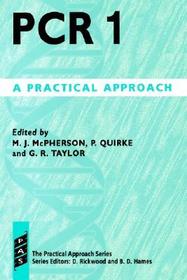
- Publisher's listprice GBP 98.00
-
46 819 Ft (44 590 Ft + 5% VAT)
The price is estimated because at the time of ordering we do not know what conversion rates will apply to HUF / product currency when the book arrives. In case HUF is weaker, the price increases slightly, in case HUF is stronger, the price goes lower slightly.
- Discount 10% (cc. 4 682 Ft off)
- Discounted price 42 138 Ft (40 131 Ft + 5% VAT)
Subcribe now and take benefit of a favourable price.
Subscribe
46 819 Ft

Availability
Out of print
Why don't you give exact delivery time?
Delivery time is estimated on our previous experiences. We give estimations only, because we order from outside Hungary, and the delivery time mainly depends on how quickly the publisher supplies the book. Faster or slower deliveries both happen, but we do our best to supply as quickly as possible.
Product details:
- Publisher IRL Press
- Date of Publication 5 September 1991
- ISBN 9780199631964
- Binding Paperback
- No. of pages274 pages
- Size 233x147x15 mm
- Weight 478 g
- Language English
- Illustrations numerous halftones, line drawings, tables 0
Categories
Short description:
Another extremely important title. The value of Polymerase Chain Reaction (PCR) cannot be over-stated. It has become one of the most widely used techniques in biomedical research, enabling the fast, inexpensive production of large quantities of DNA from minute amounts of starting material. Although the basic procedure is very simple, many variations of it have been developed for different applications, for use in such diverse areas as forensic and diagnostic
medicine, genetic engineering, and the food industry. PCR: A Practical Approach provides a general introduction to PCR for researchers new to the area, followed by chapters detailing specific applications of the technique. The emphasis throughout is on the practical applications of the technique and detailed
experimental protocols are included at all stages. A starting point for those new to PCR and will also serve as a useful reference for more experienced researchers in all areas of biological science.
Long description:
The Polymerase Chain Reaction (PCR) has become one of the most widely used techniques in biomedical research, enabling the fast, inexpensive production of large quantities of DNA from minute amounts of starting material. Although the basic procedure is very simple, many variations of it have been developed for different applications, for use in such diverse areas as forensic and diagnostic medicine, genetic engineering, and the food industry.
PCR: A Practical Approach provides a general introduction to PCR for researchers new to the area, followed by chapters detailing specific applications of the technique. It covers gene analysis at the level of restriction enzyme polymorphism, point mutation and sequence analysis. Methods for using different source materials - cloned DNA, genomic DNA, RNA, nucleic acid from archive material and PCR products themselves - are given.
The emphasis throughout is on the practical applications of the technique and detailed experimental protocols are included at all stages, backed up by advice on avoiding potential pitfalls. This volume provides a starting point for those new to PCR and will also serve as a useful reference for more experienced researchers in all areas of biological science.
'This volume provides a starting point for those new to PCR and will also serve as a useful reference for more experienced researchers in all areas of biological science.'
Biotech Products International, Sept/Oct. 1991 Vol3-No9/10
Table of Contents:
Graham R. Taylor: Polymerase chain reaction: basic principles and automation; Adrian Ivinson, & Graham R. Taylor: Polymerase chain reaction in genetic diagnosis; David P. Jackson, Julie D. Hayden, & Philip Quirke: Extraction of nucleic acid from fresh and archival material; Roland G. Roberts, A. Jane Montandon, Peter M. Green, & David R. Bentley: Analysis of genomic sequence variation using amplification and mismatch detection; Belinda J.F. Rossiter,
Markus Grompe, & C. Thomas Caskey: Detection of deletions and point mutations; Michael Litt: PCR of TG microsatellites; Susan A. Ledbetter, & David L. Nelson: Genome amplification using primers directed to interspersed repetitive sequences (IRS-PRC); Daniel H. Johnson: PCR amplification of microdissected DNA;
Jonathon Silver: Inverse polymerase chain reaction; Sarah Jane Gurr, & Michael J. McPherson: PCR-directed cDNA libraries; Michael J. McPherson, Kerrie M. Jones, & Sarah Jane Gurr: PCR with highly redundant primers; Tim Clackson, Detlef Gussow, & Peter T. Jones: General application of PCR to gene cloning and manipulation; Margaret J. Dallman, & Andrew C.G. Porter: Semi-quantitative PCR for the analysis of gene expression; Kirstin A. Eckert, & Thomas A. Kunkel: The fidelity of
DNA polymerases used in the PCR; Appendix, Index

