

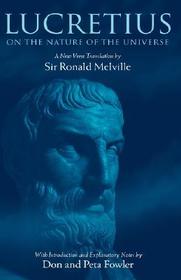
On the Nature of the Universe
Series: Oxford World's Classics;
- Publisher's listprice GBP 255.00
-
115 132 Ft (109 650 Ft + 5% VAT)
The price is estimated because at the time of ordering we do not know what conversion rates will apply to HUF / product currency when the book arrives. In case HUF is weaker, the price increases slightly, in case HUF is stronger, the price goes lower slightly.
- Discount 10% (cc. 11 513 Ft off)
- Discounted price 103 619 Ft (98 685 Ft + 5% VAT)
Subcribe now and take benefit of a favourable price.
Subscribe
115 132 Ft

Availability
printed on demand
Why don't you give exact delivery time?
Delivery time is estimated on our previous experiences. We give estimations only, because we order from outside Hungary, and the delivery time mainly depends on how quickly the publisher supplies the book. Faster or slower deliveries both happen, but we do our best to supply as quickly as possible.
Product details:
- Publisher Clarendon Press
- Date of Publication 27 November 1997
- ISBN 9780198150978
- Binding Hardback
- No. of pages312 pages
- Size 224x146x23 mm
- Weight 509 g
- Language English 0
Categories
Short description:
Lucretius' poem On the Nature of the Universe combines a scientific and philosophical treatise with some of the greatest poetry ever written. With intense moral fervour he demonstrates to humanity that in death there is nothing to fear since the soul is mortal, and the world and everything in it is governed by the mechanical laws of nature and not by gods; and that by believing this men can live in peace of mind and happiness.
MoreLong description:
Lucretius' poem On the Nature of the Universe combines a scientific and philosophical treatise with some of the greatest poetry ever written. With intense moral fervour he demonstrates to humanity that in death there is nothing to fear since the soul is mortal, and the world and everything in it is governed by the mechanical laws of nature and not by gods; and that by believing this men can live in peace of mind and happiness. He bases this on the atomic theory expounded by the Greek philosopher Epicurus, and continues with an examination of sensation, sex, cosmology, meteorology, and geology, all of these subjects made more attractive by the poetry with which he illustrates them. Melville translates this poem in a style which is both accurate and poetical, and in language accessible to the modern reader.
The Introduction gives full details of the little that is known of Lucretius' life and background in 1st century BCE Rome, and also of the Epicurean philosophy that was his inspiration. It also explores why the issues Lucretius' poem raises about the scientific and poetical views of the world continue to be important. The Explanatory Notes explain all references for the non-classicist, and attempt to situate Lucretius' scientific theories within the thought of his time and subsequent scientific discoveries.

