

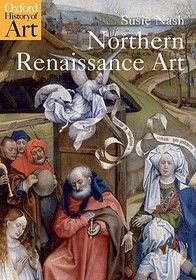
Northern Renaissance Art
Series: Oxford History of Art;
- Publisher's listprice GBP 24.99
-
11 282 Ft (10 745 Ft + 5% VAT)
The price is estimated because at the time of ordering we do not know what conversion rates will apply to HUF / product currency when the book arrives. In case HUF is weaker, the price increases slightly, in case HUF is stronger, the price goes lower slightly.
- Discount 10% (cc. 1 128 Ft off)
- Discounted price 10 154 Ft (9 671 Ft + 5% VAT)
Subcribe now and take benefit of a favourable price.
Subscribe
11 282 Ft

Availability
printed on demand
Why don't you give exact delivery time?
Delivery time is estimated on our previous experiences. We give estimations only, because we order from outside Hungary, and the delivery time mainly depends on how quickly the publisher supplies the book. Faster or slower deliveries both happen, but we do our best to supply as quickly as possible.
Product details:
- Publisher OUP Oxford
- Date of Publication 27 November 2008
- ISBN 9780192842695
- Binding Paperback
- No. of pages368 pages
- Size 238x168x16 mm
- Weight 674 g
- Language English
- Illustrations 211 illustrations in full colour 0
Categories
Short description:
The history of northern Renaissance art, from the late 14th to the early 16th century, drawing on a rich range of sources to show how northern European art dominated the visual culture of Europe in this formative period
MoreLong description:
This book offers a wide-ranging introduction to the way that art was made, valued, and viewed in northern Europe in the age of the Renaissance, from the late fourteenth to the early years of the sixteenth century. Drawing on a rich range of sources, from inventories and guild regulations to poetry and chronicles, it examines everything from panel paintings to carved altarpieces.
While many little-known works are foregrounded, Susie Nash also presents new ways of viewing and understanding the more familiar, such as the paintings of Jan van Eyck, Rogier van der Weyden, and Hans Memling, by considering the social and economic context of their creation and reception. Throughout, Nash challenges the perception that Italy was the European leader in artistic innovation at this time, demonstrating forcefully that Northern art, and particularly that of the Southern Netherlands, dominated visual culture throughout Europe in this crucial period.
Nash weaves a broad, intricate tapestry of the cultures and material practices of art.
Table of Contents:
Introduction
Problems and Perspectives
Centres, Consumers, and Artists
Processes and Procedures
Using and Viewing
Notes
Further Reading
Timeline

