

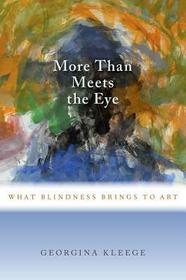
More than Meets the Eye
What Blindness Brings to Art
- Publisher's listprice GBP 122.50
-
55 308 Ft (52 675 Ft + 5% VAT)
The price is estimated because at the time of ordering we do not know what conversion rates will apply to HUF / product currency when the book arrives. In case HUF is weaker, the price increases slightly, in case HUF is stronger, the price goes lower slightly.
- Discount 10% (cc. 5 530 Ft off)
- Discounted price 49 778 Ft (47 408 Ft + 5% VAT)
Subcribe now and take benefit of a favourable price.
Subscribe
55 308 Ft

Availability
printed on demand
Why don't you give exact delivery time?
Delivery time is estimated on our previous experiences. We give estimations only, because we order from outside Hungary, and the delivery time mainly depends on how quickly the publisher supplies the book. Faster or slower deliveries both happen, but we do our best to supply as quickly as possible.
Product details:
- Publisher OUP USA
- Date of Publication 25 January 2018
- ISBN 9780190604356
- Binding Hardback
- No. of pages176 pages
- Size 163x239x17 mm
- Weight 431 g
- Language English 0
Categories
Short description:
More Than Meets the Eye seeks to dismantle traditional understandings of blindness through scrutiny of philosophical speculation, scientific case studies, literary depictions, and museum access programs for the blind. It introduces blind and visually impaired artists whose work has shattered stereotypes and opened up new aesthetic possibilities for everyone.
MoreLong description:
In More Than Meets the Eye, Georgina Kleege explores the ways that ideas about visual art and blindness are linked in many facets of the culture. While it may seem paradoxical to link blindness to visual art, western theories about art have always been haunted by the specter of blindness. The ideal art viewer is typically represented as possessing perfect vision, an encyclopedic knowledge of art, and a photographic memory of images, all which allow for an unmediated wordless communion with the work of art. This ideal viewer is defined in polar opposition to a blind person, presumed to be oblivious to the power of art, and without the cognitive capacity to draw on analogous experience.
Kleege begins her study with four chapters about traditional representations of blindness, arguing that traditional theories of blindness fail to take into account the presence of other senses, or the ability of blind people to draw analogies from non-visual experience to develop concepts about visual phenomena. She then shifts focus from the tactile to the verbal, beginning with Denis Diderot's remarkable range of techniques to describe art works for readers who were not present to view them for themselves, and how his criticism offers a powerful warrant for bringing the specter of blindness out of the shadows and into the foreground of visual experience.
Through both personal experience and scholarly treatment, Kleege dismantles the traditional denigration of blindness, contesting the notion that viewing art involves sight alone and challenging traditional understandings of blindness through close reading of scientific case studies and literary depictions. More Than Meets the Eye introduces blind and visually impaired artists whose work has shattered stereotypes and opened up new aesthetic possibilities for everyone.
This book makes a powerful contribution to the developing interdisciplinary conversation about how disability shapes and is shaped by culture.
Table of Contents:
Introduction
Chapter One: The Tenacious Life of the Hypothetical Blind Man
Chapter Two: Touching on Science
Chapter Three: Visible Braille, Invisible Blindness
Chapter Four: Touch Tourism
Chapter Five: Hearsay
Chapter Six: Dialogues with the Blind
Chapter Seven: Audio Description Described
Chapter Eight: What They Talk About When They talk About Art
Chapter Nine: Blind Self Portraits: Studies in Blue and Bronze

