
• Contact

  • Newsletter

  • About us

  • Delivery options

  • Prospero Book Market Podcast

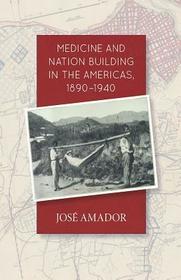
  • Medicine and Nation Building in the Americas, 1890–1940

    Medicine and Nation Building in the Americas, 1890–1940 by Amador, Jose;

      • GET 10% OFF

      • The discount is only available for 'Alert of Favourite Topics' newsletter recipients.
      • Publisher's listprice GBP 32.00
      • The price is estimated because at the time of ordering we do not know what conversion rates will apply to HUF / product currency when the book arrives. In case HUF is weaker, the price increases slightly, in case HUF is stronger, the price goes lower slightly.

        15 288 Ft (14 560 Ft + 5% VAT)
      • Discount 10% (cc. 1 529 Ft off)
      • Discounted price 13 759 Ft (13 104 Ft + 5% VAT)

    15 288 Ft

    db

    Availability

    Not yet published.

    Why don't you give exact delivery time?

    Delivery time is estimated on our previous experiences. We give estimations only, because we order from outside Hungary, and the delivery time mainly depends on how quickly the publisher supplies the book. Faster or slower deliveries both happen, but we do our best to supply as quickly as possible.

    Product details:

    • Edition number 1
    • Publisher University of Chicago Press
    • Date of Publication 25 March 2026
    • Number of Volumes Paperback

    • ISBN 9780826520210
    • Binding Paperback
    • No. of pages232 pages
    • Size 254x177 mm
    • Weight 477 g
    • Language English
    • 700

    Categories

    Short description:

    As medical science progressed through the nineteenth century, the US was at the forefront of public health initiatives across the Americas. This wasn't a purely altruistic enterprise, however, as Jose Amador reveals in Medicine and Nation Building in the Americas, 1890-1940. Rather, these efforts almost served as a precursor to modern American interventionism.

    More

    Long description:

    As medical science progressed through the nineteenth century, the United States was at the forefront of public health initiatives across the Americas. Dreadful sanitary conditions were relieved, lives were saved, and health care developed into a formidable institution throughout Latin America as doctors and bureaucrats from the United States flexed their scientific muscle. This wasn&&&39;t a purely altruistic enterprise, however, as Jose Amador reveals in Medicine and Nation Building in the Americas, 1890-1940. Rather, these efforts almost served as a precursor to modern American interventionism. For places like Cuba, Puerto Rico, and Brazil, these initiatives were especially invasive.

    Drawing on sources in Cuba, Puerto Rico, Brazil, and the United States, Amador shows that initiatives launched in colonial settings laid the foundation for the rise of public health programs in the hemisphere and transformed debates about the formation of national culture. Writers rethought theories of environmental and racial danger, while Cuban reformers invoked the yellow fever campaign to exclude nonwhite immigrants. Puerto Rican peasants flooded hookworm treatment stations, and Brazilian sanitarians embraced regionalist and imperialist ideologies. Together, these groups illustrated that public health campaigns developed in the shadow of empire propelled new conflicts and conversations about achieving modernity and progress in the tropics.

    This book is a recipient of the annual Norman L. and Roselea J. Goldberg Prize for the best project in the area of medicine.

    More
    0