

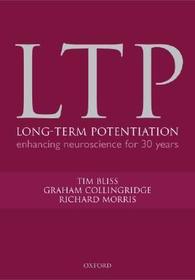
Long-term Potentiation
Enhancing neuroscience for 30 years
- Publisher's listprice GBP 147.50
-
66 596 Ft (63 425 Ft + 5% VAT)
The price is estimated because at the time of ordering we do not know what conversion rates will apply to HUF / product currency when the book arrives. In case HUF is weaker, the price increases slightly, in case HUF is stronger, the price goes lower slightly.
- Discount 10% (cc. 6 660 Ft off)
- Discounted price 59 937 Ft (57 083 Ft + 5% VAT)
Subcribe now and take benefit of a favourable price.
Subscribe
66 596 Ft

Availability
printed on demand
Why don't you give exact delivery time?
Delivery time is estimated on our previous experiences. We give estimations only, because we order from outside Hungary, and the delivery time mainly depends on how quickly the publisher supplies the book. Faster or slower deliveries both happen, but we do our best to supply as quickly as possible.
Product details:
- Publisher OUP Oxford
- Date of Publication 8 April 2004
- ISBN 9780198530305
- Binding Hardback
- No. of pages420 pages
- Size 248x173x28 mm
- Weight 889 g
- Language English
- Illustrations numerous halftones & figures 0
Categories
Short description:
In the thirty years since its discovery by Terje Lomo and Tim Bliss, the phenomenon known as Long Term Potentiation (LTP) has become one of the most extensively studied topics in contemporary neuroscience. LTP refers to a form of synaptic activity thought to play a central role in learning and memory. This volume presents a state of the art account of LTP. Provocative, accessible, and authoritative, this book makes it clear why LTP continues in equal measure to puzzle and beguile neuroscientists today.
MoreLong description:
In the thirty years since its discovery by Terje Lomo and Tim Bliss, Long Term Potentiation (LTP) has become one of the most extensively studied topics in contemporary neuroscience. In LTP the strength of synapses between neurons is potentiated following brief but intense activation. LTP is thought to play a central role in learning and memory, though the exact nature of its role is less clear. In spite of years of research, there are many questions about LTP regarding its functional relevance that remain unanswered - for example, is it a model of memory formation, or is the actual neural mechanism used by the brain to store information?
This volume presents a state of the art account of LTP. It begins with lively accounts, by the scientists most closely involved, of the discovery of LTP and of the experiments that established its basic properties and induction mechanisms. Later contributions contain reviews and new research that cover the range of molecular, cellular, physiological and behavioural approaches to the study of LTP. Provocative, accessible, and authoritative, this book makes it clear why LTP continues in equal measure to puzzle and beguile neuroscientists today.
Advance praise for Long Term Potentiation: "This book provides a definitive overview of the development of ideas about synaptic plasticity and about the wide range of current research in this fascinating field." Colin Blakemore, University of Oxford
Table of Contents:
Introduction
Foreword by Colin Blakemore
History
A prelude to long-term potentiation
The discovery of long-term potentiation
A journey from neocortex to hippocampus
Long-term potentiation in the Eocene
Long-term potentiation, cooperativity and Hebb's cell assemblies: a personal history
The induction of N-methyl-D-aspartate receptor-dependent long-term potentiation
Long-term potentiation and memory
Induction
Bidirectional synaptic plasticity: from theory to reality
Kainate receptors and the induction of mossy fibre long-term potentiation
Active dendrites, potassium channels and synaptic plasticity
Expression
Long-term potentiation in the dentate gyrus of the anaesthetized rat is accompanied by an increase in extracellular glutamate: real-time measurements using a novel dialysis electrode
Imaging spatio-temporal patterns of long-term potentiation in mouse hippocampus
Fusion pore modulation as a presynaptic mechanism contributing to expression of long-term potentiation
AMPA receptor trafficking and long-term potentiation
GluR2 protein-protein interactions and the reulation of AMPA receptors during synaptic plasticity
Expression mechanisms underlying long-term potentiation: a postsynaptic view
Silent synapses: what are they telling us about long-term potentiation?
Persistence
How long will long-term potentiation last?
Structural changes at dendritic spine synapses during long-term potentiation
Cadherins and synaptic plasticity: activity-dependent cyclin-dependent kinase 5 regulation of synaptic beta-catenin-cadherin interactions
In search of general mechanisms for long-lasting plasticity: Aplysia and the hippocampus
Function
Long-term potentiation and the ageing brain
Elements of a neurobiological theory of the hippocampus: the role of activity-dependent synaptic plasticity in memory
Genetic neuroscience of mammalian learning and memory
Inducible molecular switches for the study of long-term potentiation
MAPK, CREB and zif268 are all required for the consolidation of recognition memory
New Directions
Synaptic plasticity in the mesolimbic dopamine system
Synaptic plasticity in animal models of early Alzheimer's disease
Long-term potentiation: outstanding questions and attempted synthesis

