

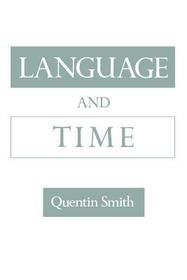
Language and Time
- Publisher's listprice GBP 43.99
-
19 861 Ft (18 915 Ft + 5% VAT)
The price is estimated because at the time of ordering we do not know what conversion rates will apply to HUF / product currency when the book arrives. In case HUF is weaker, the price increases slightly, in case HUF is stronger, the price goes lower slightly.
- Discount 10% (cc. 1 986 Ft off)
- Discounted price 17 875 Ft (17 024 Ft + 5% VAT)
Subcribe now and take benefit of a favourable price.
Subscribe
19 861 Ft

Availability
printed on demand
Why don't you give exact delivery time?
Delivery time is estimated on our previous experiences. We give estimations only, because we order from outside Hungary, and the delivery time mainly depends on how quickly the publisher supplies the book. Faster or slower deliveries both happen, but we do our best to supply as quickly as possible.
Product details:
- Publisher OUP USA
- Date of Publication 29 August 2002
- ISBN 9780195155945
- Binding Paperback
- No. of pages272 pages
- Size 152x231x22 mm
- Weight 397 g
- Language English
- Illustrations line diagrams 0
Categories
Short description:
Quentin Smith defends a tensed theory of time, which holds that temporal determinations also include metaphysical properties of pastness, presentness, and futurity. He challenges, through a careful analysis of numerous contemporary writers, many of the leading arguments for alternative viewpoints, and then concludes with an argument that the special theory of relativity is not a theory about time, but about the light-relations among physcial events.
MoreLong description:
This book offers a defence of the tensed theory of time, a critique of the New Theory of Reference, and an argument that simultaneity is absolute. Although Smith rejects ordinary language philosophy, he shows how it is possible to argue from the nature of language to the nature of reality. Specifically, he argues that semantic properties of tensed sentences are best explained by the hypothesis that they ascribe to events temporal properties of futurity, presentness, or pastness and do not merely ascribe relations of earlier than or simultaneity. He criticizes the New Theory of Reference, which holds that "now" refers directly to a time and does not ascribe the property of presentness. Smith does not adopt the old or Fregean theory of reference but develops a third alternative, based on his detailed theory of de re and de dicto propositions and a theory of cognitive significance. He concludes the book with a lengthy critique of Einstein's theory of time. Smith offers a positive argument for absolute simultaneity based on his theory that all propositions exist in time. He shows how Einstein's relativist temporal concepts are reducible to a conjunction of absolutist temporal concepts and relativist nontemporal concepts of the observable behavior of light rays, rigid bodies, and the like.
"No philosopher has done more in recent years to develop and defend the tensed theory of time: the view that past, present and future are real features of the universe."--D.H. Mellor

