

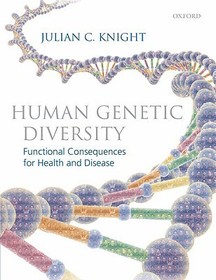
Human Genetic Diversity
Functional Consequences for Health and Disease
- Publisher's listprice GBP 83.00
-
37 474 Ft (35 690 Ft + 5% VAT)
The price is estimated because at the time of ordering we do not know what conversion rates will apply to HUF / product currency when the book arrives. In case HUF is weaker, the price increases slightly, in case HUF is stronger, the price goes lower slightly.
- Discount 10% (cc. 3 747 Ft off)
- Discounted price 33 727 Ft (32 121 Ft + 5% VAT)
Subcribe now and take benefit of a favourable price.
Subscribe
37 474 Ft

Availability
printed on demand
Why don't you give exact delivery time?
Delivery time is estimated on our previous experiences. We give estimations only, because we order from outside Hungary, and the delivery time mainly depends on how quickly the publisher supplies the book. Faster or slower deliveries both happen, but we do our best to supply as quickly as possible.
Product details:
- Publisher OUP Oxford
- Date of Publication 6 August 2009
- ISBN 9780199227709
- Binding Paperback
- No. of pages504 pages
- Size 246x189x24 mm
- Weight 1116 g
- Language English
- Illustrations 190 illustrations 0
Categories
Short description:
This book describes the remarkable progress which has been made in defining the extent and nature of human genetic variation. It provides a framework for understanding how research in this area is revolutionising our knowledge of human origins and the genetic basis of disease, as well as common traits such as obesity.
MoreLong description:
The secrets of our genetic heritage are finally being unlocked. The massive scientific effort to sequence the human genome is in fact just the beginning of a long journey as the extraordinary genetic diversity that exists between individuals becomes clear. Work in this field promises much: to understand our evolutionary origins, to define us as individuals, to predict our risk of disease and to more effectively understand, treat and prevent illness. Contemporary genetic research is allowing the basis of both rare inherited disorders and common multifactorial diseases like asthma and diabetes to be more clearly defined. Huge investments are being made and great advances have been achieved, but the challenges remain daunting. This book provides an authoritative overview of this topical and very rapidly advancing field of biomedical research.
Human Genetic Diversity describes the major classes of genetic variation and their functional consequences. A combination of cutting-edge research and landmark historical studies illustrate developments in the field, the rationale for current studies and likely future directions. Major structural variants at a chromosomal level are described, as well as copy number variation and sequence level genetic diversity. Evidence of selective pressures in human populations and insights into human evolution are illustrated. The book describes the development of linkage analysis and more recently genome-wide association studies to define the genetic basis of disease, current approaches to defining functional causative variants and the emerging fields of pharmacogenomics and individualised medicine.
The excellent illustrations, grey coloured boxes containing key information, summaries at the end of chapters and a good glossary all serve to make a difficult subject more accessible...This is an impressive single author book, providing a detailed summary of human genetics
Table of Contents:
Lessons From Haemoglobin
Finding Genes and Specific Genetic Variants Responsible for Disease
Cytogenetics and Large Scale Structural Genomic Variation
Submicroscopic Structural Variation in Health and Susceptibility to Disease
Submicroscopic Structural Variation and Genomic Disorders
Segmental Duplications and Indel Polymorphisms
Tandem Repeats
Mobile DNA Elements
SNPs, HapMap and Common Disease
Fine Scale Sequence Diversity and Signatures of Selection
Genetics of Gene Expression
Extreme Diversity in the Major Histocompatibility Complex
Parasite Wars
Human Genetic Diversity and HIV: Lessons From a War Fought on Many Fronts
Concluding Remarks and Future Directions
Glossary
References
Index

