

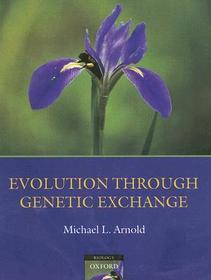
Evolution through Genetic Exchange
- Publisher's listprice GBP 115.00
-
51 922 Ft (49 450 Ft + 5% VAT)
The price is estimated because at the time of ordering we do not know what conversion rates will apply to HUF / product currency when the book arrives. In case HUF is weaker, the price increases slightly, in case HUF is stronger, the price goes lower slightly.
- Discount 10% (cc. 5 192 Ft off)
- Discounted price 46 730 Ft (44 505 Ft + 5% VAT)
Subcribe now and take benefit of a favourable price.
Subscribe
51 922 Ft

Availability
Out of print
Why don't you give exact delivery time?
Delivery time is estimated on our previous experiences. We give estimations only, because we order from outside Hungary, and the delivery time mainly depends on how quickly the publisher supplies the book. Faster or slower deliveries both happen, but we do our best to supply as quickly as possible.
Product details:
- Publisher Oxford University Press
- Date of Publication 27 July 2006
- ISBN 9780198570066
- Binding Hardback
- No. of pages272 pages
- Size 252x193x19 mm
- Weight 791 g
- Language English
- Illustrations numerous line drawings, 3 maps and 3 tables 0
Categories
Short description:
More and more data indicate that evolution has resulted in lineages consisting of mosaics of genes derived from different ancestors. It is therefore becoming increasingly clear that the tree is an inadequate metaphor of evolutionary change. In this book, Arnold promotes the 'web-of-life' metaphor as a more appropriate representation of evolutionary change in all lifeforms.
MoreLong description:
Even before the publication of Darwin's Origin of Species, the perception of evolutionary change has been a tree-like pattern of diversification - with divergent branches spreading further and further from the trunk. In the only illustration of Darwin's treatise, branches large and small never reconnect. However, it is now evident that this view does not adequately encompass the richness of evolutionary pattern and process. Instead, the evolution of species from
microbes to mammals builds like a web that crosses and re-crosses through genetic exchange, even as it grows outward from a point of origin. Some of the avenues for genetic exchange, for example introgression through sexual recombination versus lateral gene transfer mediated by transposable elements,
are based on definably different molecular mechanisms. However, even such widely different genetic processes may result in similar effects on adaptations (either new or transferred), genome evolution, population genetics, and the evolutionary/ecological trajectory of organisms. For example, the evolution of novel adaptations (resulting from lateral gene transfer) leading to the flea-borne, deadly, causative agent of plague from a rarely-fatal, orally-transmitted, bacterial species is quite
similar to the adaptations accrued from natural hybridization between annual sunflower species resulting in the formation of several new species. Thus, more and more data indicate that evolution has resulted in lineages consisting of mosaics of genes derived from different ancestors. It is therefore
becoming increasingly clear that the tree is an inadequate metaphor of evolutionary change. In this book, Arnold promotes the 'web-of-life' metaphor as a more appropriate representation of evolutionary change in all lifeforms.
This research level text is suitable for senior undergraduate and graduate level students taking related courses in departments of genetics, ecology and evolution. It will also be of relevance and use to professional evolutionary biologists and systematists seeking a comprehensive and authoritative overview of this rapidly expanding field.
Evolution Through Genetic Exchange represents a compelling argument for a paradigm shift in evolutionary biology, in which the Tree of Life is replaced conceptually by a Web of Life that connects all living organisms and their genomes. The Quarterly Review of Biology
Table of Contents:
Preface
Genetic Exchange: History of Investigations
Genetic Exchange: The Role of Species Concepts
Genetic Exchange: Testing the Hypothesis
Genetic Exchange: Barriers to Gene Flow
Genetic Exchange: Hybrid Fitness
Genetic Exchange: Gene Duplication
Genetic Exchange: Origin of New Evolutionary Lineages
Genetic Exchange: Implications For Endangered Taxa
Genetic Exchange: Humans and Associated Lineages
Genetic Exchange: Emergent Properties

