

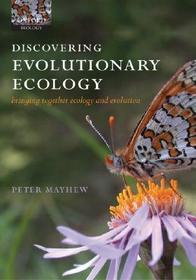
- Publisher's listprice GBP 76.00
-
34 314 Ft (32 680 Ft + 5% VAT)
The price is estimated because at the time of ordering we do not know what conversion rates will apply to HUF / product currency when the book arrives. In case HUF is weaker, the price increases slightly, in case HUF is stronger, the price goes lower slightly.
- Discount 10% (cc. 3 431 Ft off)
- Discounted price 30 883 Ft (29 412 Ft + 5% VAT)
Subcribe now and take benefit of a favourable price.
Subscribe
34 314 Ft

Availability
printed on demand
Why don't you give exact delivery time?
Delivery time is estimated on our previous experiences. We give estimations only, because we order from outside Hungary, and the delivery time mainly depends on how quickly the publisher supplies the book. Faster or slower deliveries both happen, but we do our best to supply as quickly as possible.
Product details:
- Publisher OUP Oxford
- Date of Publication 5 January 2006
- ISBN 9780198525288
- Binding Paperback
- No. of pages228 pages
- Size 240x168x12 mm
- Weight 436 g
- Language English
- Illustrations Numerous halftones, line drawings and tables 0
Categories
Short description:
Why are some kinds of organism species-rich and others species-poor? How do new species arise and why do some go extinct? Why do organisms grow and behave the way they do? This book provides an introduction to evolutionary ecology, the science that brings ecology and evolution together to help understand biological diversity. Ideal as an introduction for undergraduates, this book will also interest established researchers, providing a broad and up-to-date context for their work.
MoreLong description:
Why are some kinds of organism species-rich and others species-poor? How do new species arise and why do some go extinct? Why do organisms grow and behave the way they do? This book provides an introduction to evolutionary ecology, the science that brings ecology and evolution together to help understand biological diversity. In a concise, readable format, Peter Mayhew covers the entire breadth of the subject, from life histories and the evolution of sex, to speciation and macroecology. Many emerging fields are also introduced, such as metabolic ecology, the evolution of population dynamics, and the evolution of global ecology. Discovering Evolutionary Ecology highlights the connections between these different subject areas, and for the first time paints a picture of a truly integrated field. It illustrates the research tools utilized, and demonstrates how advances in one area can spur on developments elsewhere when scientists combine evolutionary and ecological knowledge. To maximize accessibility, the book assumes only a basic knowledge of biology, includes a comprehensive glossary, and contains almost no maths. Each chapter provides suggestions for further reading, and there is also an extensive reference list. Ideal as an introduction to evolutionary ecology for undergraduates, this book will also interest established researchers, providing a broad and up-to-date context for their work.
This book is a well-documented overview of evolutionary biology for both students and researchers.
Table of Contents:
Preface
Introduction: Where two fields meet
Evolutionary cover stories: the major transitions in evolution
Brave new worlds: the major transitions in ecology
Traits, invariants, and theories of everything: life history evolution
Sons, daughters and distorters: sex allocation and sex determining mechanisms
Voyagers, residents, and sleepers: evolution of dormancy and dispersal
Doing adaptive things: behavioural ecology, applied to plants
Evolution and numbers: evolution and population dynamics
A world of specialists: evolution of niche width
The good, the bad, and the commensal: evolution of antagonism and mutualism
Evolving together: coevolution
Birth of species: ecology and speciation mechanisms
Death of species: evolution and ecology and extinction mechanisms
Big evolution: macroevolution
Big ecology: macroecology
Combining in diversity: synthesis
References
Glossary
Index

