

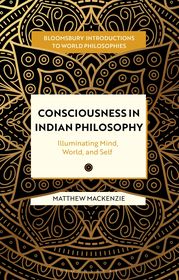
Consciousness in Indian Philosophy
Illuminating Mind, World, and Self
Series: Bloomsbury Introductions to World Philosophies;
- Publisher's listprice GBP 18.99
-
8 573 Ft (8 165 Ft + 5% VAT)
The price is estimated because at the time of ordering we do not know what conversion rates will apply to HUF / product currency when the book arrives. In case HUF is weaker, the price increases slightly, in case HUF is stronger, the price goes lower slightly.
- Discount 20% (cc. 1 715 Ft off)
- Discounted price 6 859 Ft (6 532 Ft + 5% VAT)
- Discount is valid until: 30 June 2026
Subcribe now and take benefit of a favourable price.
Subscribe
8 573 Ft

Availability
Not yet published.
Why don't you give exact delivery time?
Delivery time is estimated on our previous experiences. We give estimations only, because we order from outside Hungary, and the delivery time mainly depends on how quickly the publisher supplies the book. Faster or slower deliveries both happen, but we do our best to supply as quickly as possible.
Product details:
- Publisher Bloomsbury Publishing (UK)
- Date of Publication 23 July 2026
- ISBN 9781350343009
- Binding Paperback
- No. of pages248 pages
- Size 214x136x20 mm
- Weight 240 g
- Language 700
Categories
Long description:
Consciousness has been a central theme of Indian philosophy for more than 2500 years. Returning to the theories that originated in the Classical age, Matthew MacKenzie presents the first comprehensive overview of Indian views about the nature and structure of consciousness.
MacKenzie looks to the Upanisads and the early Buddhist discourses for the roots of the theories, following consciousness as it developed in the Abhidharma, Yogacara, and Pramaavada schools of Buddhism and the Nyaya, Yoga, Advaita, and Nondual Saiva schools of Hinduism. In the Upanisads, he introduces us to sages and kings who discussed the elusive light (prakasa) of consciousness and its relation to one's deepest self (atman). In early Buddhist texts the complex flow of conscious mental events are explored within an impermanent, selfless reality. In yogic texts we find a sharp distinction between ever-shifting objects and the pure light of consciousness.
Addressing timeless questions surrounding the fundamental nature of reality, MacKenzie focuses throughout on whether and how consciousness illuminates objects as well as itself. A critical and comparative introduction to a major philosophical subject, this book marks a new direction for understanding the cross-cultural philosophy of consciousness.
Table of Contents:
Introduction: Cosmopolitan Philosophy of Consciousness
Chapter 1: Consciousness as Luminosity
Origins
Other-Luminosity
Self-Luminosity
The Self
Comparative Connections
Chapter 2: Nyaya
The Nyaya School
Other Luminosity
Self and World
Comparative Connections
Chapter 3: Abhidharma
Abhidharma Schools
Mind and Mental Factors
Perception and Cognition
Selflessness
Comparative Connections
Chapter 4: Yoga
The Yoga School
Stilling the Modifications
Self and World
Self-Luminosity
Comparative Connections
Chapter 5: Yogacara
The Yogacara School
Eight Dimensions of Consciousness
Three Natures of Phenomena
Idealism
Comparative Connections
Chapter 6: Advaita
Advaita Vedanta
The Witness
Mind, Body, World
Individuation
Comparative Connections
Chapter 7: Buddhist Pramaavada
Pramaavada
Dual-Aspects
Reflexive Awareness
Selflessness
Comparative Connections
Chapter 8: Nondual Saiva
Kashmir Saiva
Consciousness and Power
Light and reflection
Dynamic Nonduality
Comparative Connections
Conclusion: New directions
Bibliography
Index

