

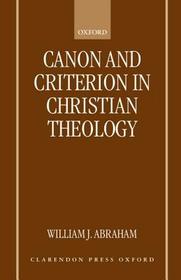
Canon and Criterion in Christian Theology
From the Fathers to Feminism
- Publisher's listprice GBP 367.50
-
165 926 Ft (158 025 Ft + 5% VAT)
The price is estimated because at the time of ordering we do not know what conversion rates will apply to HUF / product currency when the book arrives. In case HUF is weaker, the price increases slightly, in case HUF is stronger, the price goes lower slightly.
- Discount 10% (cc. 16 593 Ft off)
- Discounted price 149 334 Ft (142 223 Ft + 5% VAT)
Subcribe now and take benefit of a favourable price.
Subscribe
165 926 Ft

Availability
printed on demand
Why don't you give exact delivery time?
Delivery time is estimated on our previous experiences. We give estimations only, because we order from outside Hungary, and the delivery time mainly depends on how quickly the publisher supplies the book. Faster or slower deliveries both happen, but we do our best to supply as quickly as possible.
Product details:
- Publisher OUP Oxford
- Date of Publication 21 May 1998
- ISBN 9780198269397
- Binding Hardback
- No. of pages516 pages
- Size 226x148x33 mm
- Weight 793 g
- Language English 0
Categories
Short description:
This book provides an original and important narrative on the significance of canon in the Christian tradition. Abraham shows that the move to treat canon as a criterion of truth has had unsuspecting consequences for the history of theology and philosophy, from the Fathers to modern feminist theology.
MoreLong description:
The book provides an original and important narrative on the significance of canon in the Christian tradition. Standard accounts of canon reduce canon to scripture and treat scripture as a criterion of truth. Scripture is then related in positive or negative ways to tradition, reason, and experience. Such projects involve a misreading of the meaning and content of canon --- they locate the canonical heritage of the church within epistemology --- and Abraham charts the fatal consquences of this move, from the Fathers to modern feminist theology. In the process he shows that the central epistemological concerns of the Enlightenment have Christian origins and echoes. He also shows that the crucial developments of theology from the Reformation onwards involve extraordinary efforts to fix the foundations of faith. This trajectory is now exhausted theologically and spiritually. Hence, the door is opened for a recovery of the full canonical heritage of the early church and for fresh work on the epistemology of theology.
He takes us on a fascinating trip through history, providing us with penetrating analyses, often driving home his point with brilliant metaphors

