

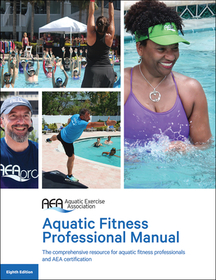
Aquatic Fitness Professional Manual
- Publisher's listprice GBP 53.00
-
23 929 Ft (22 790 Ft + 5% VAT)
The price is estimated because at the time of ordering we do not know what conversion rates will apply to HUF / product currency when the book arrives. In case HUF is weaker, the price increases slightly, in case HUF is stronger, the price goes lower slightly.
- Discount 20% (cc. 4 786 Ft off)
- Discounted price 19 144 Ft (18 232 Ft + 5% VAT)
- Discount is valid until: 30 June 2026
Subcribe now and take benefit of a favourable price.
Subscribe
23 929 Ft

Availability
Estimated delivery time: In stock at the publisher, but not at Prospero's office. Delivery time approx. 3-5 weeks.
Not in stock at Prospero.
Why don't you give exact delivery time?
Delivery time is estimated on our previous experiences. We give estimations only, because we order from outside Hungary, and the delivery time mainly depends on how quickly the publisher supplies the book. Faster or slower deliveries both happen, but we do our best to supply as quickly as possible.
Product details:
- Edition number 8
- Publisher Human Kinetics
- Date of Publication 27 March 2025
- Number of Volumes Trade Paperback
- ISBN 9781718235120
- Binding Paperback
- No. of pages416 pages
- Size 279x216 mm
- Weight 1157 g
- Language English 582
Categories
Short description:
Discover the powerful benefits of aquatic exercise across all ages and abilities. Expert insights reveal techniques from popular fitness formats to specialized programs for chronic conditions and cognitive health. This resource equips trainers with detailed workout plans and practical tools for innovative pool sessions.
MoreLong description:
Water exercise is a proven fitness activity with health and well-being benefits for all age groups, abilities, and fitness levels. As such, it is one of the most popular fitness trends among those seeking effective reduced-impact options for group exercise, small-group training, personal sessions, and rehabilitation therapy. As the primary preparation resource for the certification exam of the Aquatic Exercise Association (AEA) and a recommended resource for the certification exam of the Aquatic Therapy & Rehab Institute (ATRI), Aquatic Fitness Professional Manual, Eighth Edition, is the most comprehensive resource available to help you design and lead effective exercise sessions in the pool.
With contributions from 23 industry experts, Aquatic Fitness Professional Manual covers the foundations of fitness and exercise, the aquatic environment, and instruction and programming. You will learn how to energize your teaching with techniques based on popular fitness formats-such as functional training, yoga, boot camp, Ai Chi, circuits, and intervals-and programs for various chronic conditions. You’ll also find updated information on shallow- and deep-water exercise.
Presenting a new full-color format and updates that reflect the latest research and exercise guidelines, the eighth edition also incorporates the following:
- AEA standards and guidelines for aquatic fitness programming
- Expanded guidelines for working with special populations and those with health conditions, including dementia and autism spectrum disorder
- Facts about the benefits of exercise on cognitive health and programming ideas for cognitive fitness training
- A new section on diversity, equity, inclusion, and accessibility
Nowhere else will you find the fitness applications and comprehensive programming you need in one convenient resource. Aquatic Fitness Professional Manual will not only help you in preparing for certification but also aid you in cultivating the critical skills needed to lead safe, enjoyable, and effective aquatic exercise programs.
Note: A code for accessing HKPropel is included with this ebook. More
Table of Contents:
AEA Mission Statement and Purpose
Part I. Foundations of Fitness and Exercise
Chapter 1. Physical Fitness
Physical Activity, Exercise, and Physical Fitness
Health-Related Components of Physical Fitness
Skill-Related Components of Physical Fitness
Guidelines for Exercise
Monitoring Intensity
Training Formats
Benefits of Regular Exercise
Importance of Nutrition
Chapter 2. Exercise Anatomy
Structural Organization of the Human Body
Systems of the Human Body
Skeletal System
Muscular System
Nervous System
Respiratory System
Cardiovascular System
Chapter 3. Exercise Physiology
Physiological Principles
Energy Metabolism
Skeletal Muscle Tissue
Acute Responses to Aerobic and Anaerobic Exercise
Chapter 4. Movement Analysis
Anatomical Position
Anatomical Reference Terms
Posture, Alignment, and Balance
Planes of Movement
Joint Actions
Types of Joints
Joints Most Involved in Exercise Design
Interaction Between the Skeletal and Muscular Systems
Movement and Muscle Actions With Aquatic Exercise
Influence of Aquatic Equipment
Chapter 5. Exercise Motivation and Behavior
Foundations of Behavior Change
Motivating Participants for Sustained Change
Case Scenarios
Planning for Success
Part II. The Aquatic Environment
Chapter 6. Physical Laws as Applied to the Aquatic Environment
Motion
Water Immersion
Essential Properties of Water
Newton’s Laws of Motion
Additional Training Principles
Interaction and Application
Chapter 7. Pool Environment and Design
Water Temperature
Air Temperature and Humidity
Heat Dissipation in the Aquatic Environment
Water and Air Quality
Pool Considerations
Participant Considerations
Chapter 8. Safety and Risk Management
Risk Management and Standard of Care
Liability
Insurance
Emergency Procedures
Distress and Drowning
Sudden Illness
Injuries
Aquatic Environment Safety Concerns
Part III. Instruction and Programming
Chapter 9. Shallow-Water Exercise
Defining Shallow-Water Exercise
Shallow-Water Exercise Research and Application
Shallow-Water Base Moves
Impact Options for Shallow-Water Exercise
Shallow-Water Tempo Options
Posture and Alignment With Shallow-Water Exercise
Chapter 10. Deep-Water Exercise
Defining Deep-Water Exercise
Deep-Water Exercise Research and Application
Deep-Water Base Moves
Nonimpact Water Exercise
Deep-Water Tempo Options
Deep-Water Considerations
Participant Evaluation and Safety
Chapter 11. Aquatic Exercise Leadership
Form and Alignment
Cueing
Transitions
Choreography
Music
Music Use in Fitness
Safe and Effective Instruction
Professionalism
Diversity, Equity, Inclusion, and Accessibility
Chapter 12. Aquatic Exercise Programming
Program Components
Aquatic Program Formats
Movements Requiring Greater Consideration
Chapter 13. Reaching Diverse Populations Through Aquatic Programming
Older Adults
Children and Adolescents
Pregnancy and Postpartum
Obesity
Musculoskeletal Considerations
Cardiovascular Disease
Pulmonary (Lung) Disease
Diabetes
Multiple Sclerosis
Parkinson’s Disease
Cerebral Palsy
Dementia
Autism Spectrum Disorder
Cancer
Appendix A. Shallow-Water Exercise
Appendix B. Deep-Water Exercise
Appendix C. Aquatic Fitness Equipment
Appendix D. Answers to Chapter Review Questions

