

- Publisher's listprice GBP 45.99
-
20 764 Ft (19 775 Ft + 5% VAT)
The price is estimated because at the time of ordering we do not know what conversion rates will apply to HUF / product currency when the book arrives. In case HUF is weaker, the price increases slightly, in case HUF is stronger, the price goes lower slightly.
- Discount 20% (cc. 4 153 Ft off)
- Discounted price 16 611 Ft (15 820 Ft + 5% VAT)
- Discount is valid until: 30 June 2026
Subcribe now and take benefit of a favourable price.
Subscribe
18 687 Ft

Availability
Not yet published.
Why don't you give exact delivery time?
Delivery time is estimated on our previous experiences. We give estimations only, because we order from outside Hungary, and the delivery time mainly depends on how quickly the publisher supplies the book. Faster or slower deliveries both happen, but we do our best to supply as quickly as possible.
Product details:
- Edition number 1
- Publisher Routledge
- Date of Publication 20 July 2026
- ISBN 9781032525198
- Binding Paperback
- No. of pages258 pages
- Size 229x152 mm
- Language English
- Illustrations 17 Illustrations, black & white; 6 Halftones, black & white; 11 Line drawings, black & white; 3 Tables, black & white 700
Categories
Short description:
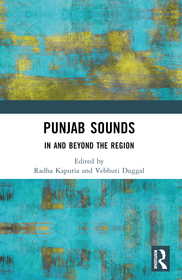
Punjab Sounds nuances our understanding of the region's imbrications with sound. It argues that rather than being territorially bounded, the region only emerges in ‘regioning’, i.e., in words, gestures, objects and techniques that do the region.
MoreLong description:
Punjab Sounds nuances our understanding of the region's imbrications with sound. It argues that rather than being territorially bounded, the region only emerges in ‘regioning’, i.e., in words, gestures, objects, and techniques that do the region. Regioning sound reveals the relationship between sound and the region in three interlinked ways: in doing, knowing, and feeling the region through sound.
The volume covers several musical genres of the Punjab region, including within its geographical remit the Punjabi diaspora and east and west Punjab. It also provides new understandings of the role that ephemeral cultural expressions, especially music and sound, play in the formulation of Punjabi identity. Featuring contributions from scholars across North America, South Asia, Europe, and the UK, it brings together diverse perspectives. The chapters use a range of different methods, ranging from computational analysis and ethnography to close textual analysis, demonstrating some of the ways in which research on music and sound can be carried out.
The chapters will be relevant for anyone working on Punjab’s music, including the Punjabi diaspora, music, and sound in the Global South. Moreover, it will be useful for undergraduate and postgraduate students in the following areas: ethnomusicology, cultural studies, film studies, music studies, South Asian studies, Punjab studies, history, and sound studies, among others.
This sonically textured study of Punjab goes beyond a circulation of stereotype and defies monolithic notions of history, region, topology, gender, and human expression. Radha Kapuria and Vebhuti Duggal compile an original set of thoughtful essays where a sensory engagement with the region is infused with deeply vibrant, intertextual narratives that bring a new nuance to our larger understanding of how sound shapes territories and identities.
–Gurminder K. Bhogal, Catherine Mills Davis Professor in Music, Wellesley College, Massachusetts.
Can Punjab as a region be heard, felt, touched, and seen simultaneously through scholarship that focusses on soundscapes and sound studies? Spanning across the historical to the contemporary on YouTube, this interdisciplinary collection of fine and original essays shows us the way and how to do it. Punjab Sounds has much to offer and is a gift to the wider field of enquiry.
–Rajinder Dudrah, Professor of Cultural Studies and Creative Industries, Birmingham City University.
Suturing the mythic and the historic, the devotional and the divided, this cross-disciplinary volume attunes us to the worlding possibility of sound. It is also a pioneering performance that refigures region – Punjab in this case – via its translocally audible and creaturely forms.
–Omar Kasmani, Guest Lecturer in Social and Cultural Anthropology, Freie Universität Berlin.
Punjab Sounds is a seminal contribution that reframes debates on region formation within South Asia, unravels some of the conceptual straitjackets, and suggests the potential for rethinking the region through sonic practices and affects. Spanning several key developments across colonial and post-colonial South Asia and exploring myriad themes, technologies, sound objects and musical forms, each chapter provides substantive methodological insights into researching sound practices and region formation. It brings into colloquy the fields of ethnomusicology, sound studies, film and media studies, performance studies, history, and religious studies. The book will be an undeniably valuable resource for students and scholars of these fields and will appeal to a wide range of readers in higher education and the general public alike.
–Bindu Menon, Associate Professor in Media Studies, Azim Premji University, Bengaluru.
MoreTable of Contents:
Foreword by Ira Bhaskar (Professor (retd) of Cinema Studies at the School of Arts and Aesthetics at Jawaharlal Nehru University in New Delhi, India)
1. Introduction
Regioning Sound from South Asia
Vebhuti Duggal (Assistant Professor in Film Studies, Ambedkar University Delhi) and
Radha Kapuria (Assistant Professor in South Asian History, Durham University)
I. Aural Signs of the Region
2. One Transnation under a Groove: ‘Chaal’ and the Modern Punjabi Soundscape
Gibb Schreffler (Associate Professor of Music at Pomona College, California)
3. Sound and Politics of Classical Music in West Punjab
G. Ali Shair (Research Fellow in Sociology, University of Warwick)
4. Mixing the legends–Changing Representations of Nostalgia in Diasporic Punjabi remix culture
Julia Szivak (Assistant Lecturer,Pazmany Peter Catholic University, Budapest)
II. Soundscapes of the Punjab
5. Trinjan Audiotopias: Complaint, Desire, and the Bawdy in Punjabi Giddha Performance Practices
Ranbir K. Johal (Lecturer, Kwantlen Polytechnic University, Vancouver) and Kiran K. Sunar (Assistant Professor in Punjabi Language, Literature, and Culture at the University of British Columbia)
6. Folkloric Poetic Traditions and Gender Relations: An Ethnomusicological Study of Sithnian as a Celebratory Resistance in the Punjab
Sumera Saleem (Assistant Professor of Literature, University of Sargodha)
7. Mapping Punjab Sounds: Two popular Songs about Agriculture and Pottery
Sakoon Singh (Assistant Professor of English, DAV College, Panjab University, Chandigarh)
8. Decoding Loudness: The Punjabi Soundscape in Bollywood
Shikha Jhingan (Associate Professor in Film Studies, Jawaharlal Nehru University, Delhi)
III. Mediating Regional Sound
9. Modernity, Modality, and Meaning: Technological Mediation of Śabad Kīrtan at the Golden Temple
James Kirit Singh (PhD in Ethnomusicology, SOAS, University of London)
10. Identity and affect: Exploring technology and the sonic in Dalit Music in Punjab
Radhika Kumar (Professor in Political Science, Motilal Nehru College, University of Delhi)
11. “Love From India”: YouTube Qawwālī as Affective Solidarity in India-Pakistan Relations
Thomas Graves (PhD in Ethnomusicology, Durham University)
Afterword: Coda by Virinder Kalra (Professor in Sociology, University of Warwick)
Acknowledgments
Index
More
