

-
20% KEDVEZMÉNY?
- A kedvezmény csak az 'Értesítés a kedvenc témákról' hírlevelünk címzettjeinek rendeléseire érvényes.
- Kiadói listaár GBP 76.00
-
34 314 Ft (32 680 Ft + 5% áfa)
Az ár azért becsült, mert a rendelés pillanatában nem lehet pontosan tudni, hogy a beérkezéskor milyen lesz a forint árfolyama az adott termék eredeti devizájához képest. Ha a forint romlana, kissé többet, ha javulna, kissé kevesebbet kell majd fizetnie.
- Kedvezmény(ek) 20% (cc. 6 863 Ft off)
- Kedvezményes ár 27 451 Ft (26 144 Ft + 5% áfa)
- A kedvezmény érvényes eddig: 2026. június 30.
Iratkozzon fel most és részesüljön kedvezőbb árainkból!
Feliratkozom
34 314 Ft

Beszerezhetőség
Becsült beszerzési idő: A Prosperónál jelenleg nincsen raktáron, de a kiadónál igen. Beszerzés kb. 3-5 hét..
A Prosperónál jelenleg nincsen raktáron.
Why don't you give exact delivery time?
A beszerzés időigényét az eddigi tapasztalatokra alapozva adjuk meg. Azért becsült, mert a terméket külföldről hozzuk be, így a kiadó kiszolgálásának pillanatnyi gyorsaságától is függ. A megadottnál gyorsabb és lassabb szállítás is elképzelhető, de mindent megteszünk, hogy Ön a lehető leghamarabb jusson hozzá a termékhez.
A termék adatai:
- Kiadó Indiana University Press
- Megjelenés dátuma 2020. január 7.
- Kötetek száma Print PDF
- ISBN 9780253045140
- Kötéstípus Keménykötés
- Terjedelem338 oldal
- Méret 229x152 mm
- Súly 667 g
- Nyelv angol
- Illusztrációk 5 b&w illus. Illustrations, black & white 0
Kategóriák
Hosszú leírás:
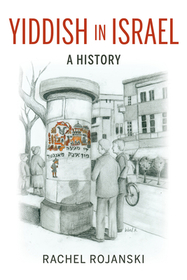
Yiddish in Israel: A History challenges the commonly held view that Yiddish was suppressed or even banned by Israeli authorities for ideological reasons, offering instead a radical new interpretation of the interaction between Yiddish and Israeli Hebrew cultures. Author Rachel Rojanski tells the compelling and yet unknown story of how Yiddish, the most widely used Jewish language in the pre-Holocaust world, fared in Zionist Israel, the land of Hebrew.
Following Yiddish in Israel from the proclamation of the State until today, Rojanski reveals that although Israeli leadership made promoting Hebrew a high priority, it did not have a definite policy on Yiddish. The language's varying fortune through the years was shaped by social and political developments, and the cultural atmosphere in Israel. Public perception of the language and its culture, the rise of identity politics, and political and financial interests all played a part. Using a wide range of archival sources, newspapers, and Yiddish literature, Rojanski follows the Israeli Yiddish scene through the history of the Yiddish press, Yiddish theater, early Israeli Yiddish literature, and high Yiddish culture. With compassion, she explores the tensions during Israel's early years between Yiddish writers and activists and Israel's leaders, most of whom were themselves Eastern European Jews balancing their love of Yiddish with their desire to promote Hebrew. Finally Rojanski follows Yiddish into the 21st century, telling the story of the revived interest in Yiddish among Israeli-born children of Holocaust survivors as they return to the language of their parents.
Tartalomjegyzék:
"
Acknowledgements
A Note on Transliteration, Translation, and Archival Signatures
Introduction
1. ""Even the Stones Speak Hebrew"": The Melting Pot, and Israel's Cultural Policy
2. The Heart of Yiddish Culture: Yiddish Press 1948-1968
3. ""We are Jewish Actors from the Diaspora"": Yiddish Actors, Yiddish Theater, and the Jewish State, 1948–1965
4. ""To Assemble the Scattered Spirit of Israel"": High Yiddish Culture – Di goldene keyt and the Yiddish Chair at the Hebrew University
5. ""We Are Writing A New Chapter in Yiddish Literature"":The literary Group Yung Yisroel and the Zionist Master Narrative
6. ""You No Longer Need to be Afraid to Love Yiddish"": 1965, The Production of Di megile, and the Return of Eastern Europe to Israel's Collective Memory
7. The End of the 20th Century: Private Memory, Collective Image and the Retreat from the 'Melting Pot'
Epilogue
Bibliography

