

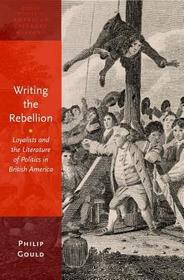
Writing the Rebellion
Loyalists and the Literature of Politics in British America
Sorozatcím: Oxford Studies in American Literary History; 3;
-
10% KEDVEZMÉNY?
- A kedvezmény csak az 'Értesítés a kedvenc témákról' hírlevelünk címzettjeinek rendeléseire érvényes.
- Kiadói listaár GBP 71.00
-
32 056 Ft (30 530 Ft + 5% áfa)
Az ár azért becsült, mert a rendelés pillanatában nem lehet pontosan tudni, hogy a beérkezéskor milyen lesz a forint árfolyama az adott termék eredeti devizájához képest. Ha a forint romlana, kissé többet, ha javulna, kissé kevesebbet kell majd fizetnie.
- Kedvezmény(ek) 10% (kb. 3 205 Ft)
- Kedvezményes ár 28 851 Ft (27 477 Ft + 5% áfa)
Iratkozzon fel most és részesüljön kedvezőbb árainkból!
Feliratkozom
32 056 Ft

Beszerezhetőség
Megrendelésre a kiadó utánnyomja a könyvet. Rendelhető, de a szokásosnál kicsit lassabban érkezik meg.
Why don't you give exact delivery time?
A beszerzés időigényét az eddigi tapasztalatokra alapozva adjuk meg. Azért becsült, mert a terméket külföldről hozzuk be, így a kiadó kiszolgálásának pillanatnyi gyorsaságától is függ. A megadottnál gyorsabb és lassabb szállítás is elképzelhető, de mindent megteszünk, hogy Ön a lehető leghamarabb jusson hozzá a termékhez.
A termék adatai:
- Kiadó OUP USA
- Megjelenés dátuma 2013. június 27.
- ISBN 9780199967896
- Kötéstípus Keménykötés
- Terjedelem230 oldal
- Méret 163x234x25 mm
- Súly 482 g
- Nyelv angol
- Illusztrációk 10 illustrations 0
Kategóriák
Rövid leírás:
Writing the Rebellion presents a cultural history of loyalist writing in early America, dissolving the old legend that loyalists were more British than American, and patriots the embodiment of a new sensibility.
TöbbHosszú leírás:
Writing the Rebellion presents a cultural history of loyalist writing in early America. There has been a spate of related works recently, but Philip Gould's narrative offers a completely different view of the loyalist/patriot contentions than appears in any of these accounts. By focusing on the literary projections of the loyalist cause, Gould dissolves the old legend that loyalists were more British than American, and patriots the embodiment of a new sensibility drawn from their American situation and upbringing. He shows that both sides claimed to be heritors of British civil discourse, Old World learning, and the genius of English culture. The first half of Writing Rebellion deals with the ways "political disputation spilled into arguments about style, form, and aesthetics, as though these subjects could secure (or ruin) the very status of political authorship." Chapters in this section illustrate how loyalists attack patriot rhetoric by invoking British satires of an inflated Whig style by Alexander Pope and Jonathan Swift. Another chapter turns to Loyalist critiques of Congressional language and especially the Continental Association, which was responsible for radical and increasingly violent measures against the Loyalists. The second half of Gould's book looks at satiric adaptations of the ancient ballad tradition to see what happens when patriots and loyalists interpret and adapt the same text (or texts) for distinctive yet related purposes. The last two chapters look at the Loyalist response to Thomas Paine's Common Sense and the ways the concept of the author became defined in early America. Throughout the manuscript, Gould acknowledges the purchase English literary culture continued to have in revolutionary America, even among revolutionaries.
Writing the Rebellion leaves us with a vision of eighteenth-century print culture in British America as more labile and more literary than we'd realized, and with an expanded sense of why that matters.
Tartalomjegyzék:
Introduction
Chapter 1: The Stamp Act Crisis and the Sublime Style of Politics
Chapter 2: Wit and Ridicule in Revolutionary New York
Chapter 3: Satirizing the Congress: Ancient Balladry and Literary Taste
Chapter 4: Loyalists and the Author of Common Sense
Chapter 5: New English Rebellion
Epilogue

