

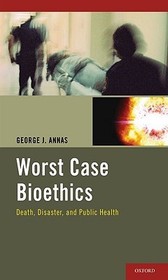
Worst Case Bioethics
Death, Disaster, and Public Health
-
10% KEDVEZMÉNY?
- A kedvezmény csak az 'Értesítés a kedvenc témákról' hírlevelünk címzettjeinek rendeléseire érvényes.
- Kiadói listaár GBP 27.50
-
12 416 Ft (11 825 Ft + 5% áfa)
Az ár azért becsült, mert a rendelés pillanatában nem lehet pontosan tudni, hogy a beérkezéskor milyen lesz a forint árfolyama az adott termék eredeti devizájához képest. Ha a forint romlana, kissé többet, ha javulna, kissé kevesebbet kell majd fizetnie.
- Kedvezmény(ek) 10% (cc. 1 242 Ft off)
- Kedvezményes ár 11 175 Ft (10 643 Ft + 5% áfa)
Iratkozzon fel most és részesüljön kedvezőbb árainkból!
Feliratkozom
12 416 Ft

Beszerezhetőség
Bizonytalan a beszerezhetőség. Érdemes még egyszer keresni szerzővel és címmel. Ha nem talál másik, kapható kiadást, forduljon ügyfélszolgálatunkhoz!
Why don't you give exact delivery time?
A beszerzés időigényét az eddigi tapasztalatokra alapozva adjuk meg. Azért becsült, mert a terméket külföldről hozzuk be, így a kiadó kiszolgálásának pillanatnyi gyorsaságától is függ. A megadottnál gyorsabb és lassabb szállítás is elképzelhető, de mindent megteszünk, hogy Ön a lehető leghamarabb jusson hozzá a termékhez.
A termék adatai:
- Kiadó OUP USA
- Megjelenés dátuma 2010. április 29.
- ISBN 9780195391732
- Kötéstípus Keménykötés
- Terjedelem360 oldal
- Méret 242x162x28 mm
- Súly 640 g
- Nyelv angol 0
Kategóriák
Hosszú leírás:
Bioethics, still in its infancy, is routinely called on by the government to provide political cover for controversial public health decisions involving the life and death of Americans. Doomsday or worst-case scenarios are often at the heart of these biopolitical decisions. A central feature of science fiction, these scenarios can impart useful insights. But worst-case scenarios, like Frankenstein's monster, can also be unpredictably destructive, undermining both preparedness and
the very values bioethics seeks to promote. Discovering a new flu strain, for example, leads immediately to visions of the 1918 flu pandemic, the worst in human history. Likewise, a "ticking time bomb" scenario leads to the use of the "saving lives" rationale that permits lawyers to justify it and
physicians to carry it out.
The worst case charge of "death panels" continues to threaten meaningful healthcare reform in the US. Fundamental change in American healthcare, Annas argues, will require fundamental change in American, including confronting our obsession with technology and our denial of death, and replacing our over-reliance on the military and market metaphors in medicine. "A combination of the ecological and rights metaphors could help us successfully navigate the waters of change."
In Worst Case Bioethics, George Annas employs contemporary disputes involving death and disaster to explore the radical changes underway in public health practice, the application of constitutional law to medicine, and human rights discourse to promote human health and wellbeing. Worst-case scenarios, especially worst-case bioethics scenarios, distort debate, limit options, rationalize human rights abuses, and undermine equality and social justice. It is, nonetheless, possible to
temper worst-case scenarios in ways that promote both the development of a meaningful American bioethics, and a life and liberty affirming global health and human rights movement.
Written at the intersection of law, bioethics, public health, and human rights, Worst Case Bioethics will interest not only bioethicists but scholars in public health, public policy, and human rights law, as well as members of the public who want to participate in these policy debates.
In short, Worst Case Bioethics offers a valuable consideration of how public health policy is sometimes shaped by fear in a counterproductive manner. The book is well written, well reasoned, and persuasive. I recommend it highly to all who are interested in bioethics, public health policy, or national security policy.

