

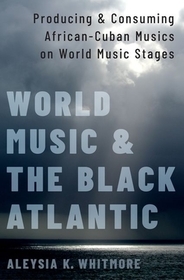
World Music and the Black Atlantic
Producing and Consuming African-Cuban Musics on World Music Stages
-
10% KEDVEZMÉNY?
- A kedvezmény csak az 'Értesítés a kedvenc témákról' hírlevelünk címzettjeinek rendeléseire érvényes.
- Kiadói listaár GBP 102.50
-
46 278 Ft (44 075 Ft + 5% áfa)
Az ár azért becsült, mert a rendelés pillanatában nem lehet pontosan tudni, hogy a beérkezéskor milyen lesz a forint árfolyama az adott termék eredeti devizájához képest. Ha a forint romlana, kissé többet, ha javulna, kissé kevesebbet kell majd fizetnie.
- Kedvezmény(ek) 10% (kb. 4 627 Ft)
- Kedvezményes ár 41 651 Ft (39 668 Ft + 5% áfa)
Iratkozzon fel most és részesüljön kedvezőbb árainkból!
Feliratkozom
46 278 Ft

Beszerezhetőség
Megrendelésre a kiadó utánnyomja a könyvet. Rendelhető, de a szokásosnál kicsit lassabban érkezik meg.
Why don't you give exact delivery time?
A beszerzés időigényét az eddigi tapasztalatokra alapozva adjuk meg. Azért becsült, mert a terméket külföldről hozzuk be, így a kiadó kiszolgálásának pillanatnyi gyorsaságától is függ. A megadottnál gyorsabb és lassabb szállítás is elképzelhető, de mindent megteszünk, hogy Ön a lehető leghamarabb jusson hozzá a termékhez.
A termék adatai:
- Kiadó OUP USA
- Megjelenés dátuma 2020. július 22.
- ISBN 9780190083946
- Kötéstípus Keménykötés
- Terjedelem264 oldal
- Méret 160x243x25 mm
- Súly 508 g
- Nyelv angol
- Illusztrációk 30 figures; 1 table 6
Kategóriák
Rövid leírás:
Examining the experiences of musicians, industry personnel, and audiences, World Music and the Black Atlantic offers a nuanced view of a global industry informed and marked by diverse transnational perspectives and histories of transatlantic exchange.
TöbbHosszú leírás:
In the mid-20th century, African musicians took up Cuban music as their own and claimed it as a marker of black Atlantic connections and of cosmopolitanism untethered from European colonial relations. Today, Cuban/African bands popular in Africa in the 1960s and '70s have moved into the world music scene in Europe and North America, and world music producers and musicians have created new West African-Latin American collaborations expressly for this market niche. World Music and the Black Atlantic follows two of these bands, Orchestra Baobab and AfroCubism, and the industry and audiences that surround them-from musicians' homes in West Africa, to performances in Europe and North America, to record label offices in London. World Music and the Black Atlantic examines the intensely transnational experiences of musicians, industry personnel, and audiences as they collaboratively produce, circulate, and consume music in a specific post-colonial era of globalization.
Musicians, industry personnel, and audiences work with and push against one another as they engage in personal collaborations imbued with histories of global travel and trade. They move between and combine Cuban and Malian melodies, Norwegian and Senegalese markets, and histories of slavery and independence as they work together to create international commodities. Understanding the unstable and dynamic ways these peoples, musics, markets, and histories intersect elucidates how world music actors assert their places within, and produce knowledge about, global markets, colonial histories, and the black Atlantic. World Music and the Black Atlantic offers a nuanced view of a global industry that is informed and deeply marked by diverse transnational perspectives and histories of transatlantic exchange.
Whitmore has crafted a compelling ethnographic account of how industry, musicians, and audiences encounter each other in systems of the contested "world music" genre... Recommended. Lower-division undergraduates through faculty; general readers.
Tartalomjegyzék:
Acknowledgements
Introduction
Part I Industry
Chapter 1 Setting the Scene: The World Music Industry
Chapter 2 The Art of Representing the Other
Part II Musicians
Chapter 3 Cuban Music is African Music: Musicians and their Music
Chapter 4 Musicians and the Industry
Part III Audiences
Chapter 5 Frames
Chapter 6 Experiencing Pleasure
Postlude
Moving forward and looking back: Where are We? Where are We Going?
Bibliography

