

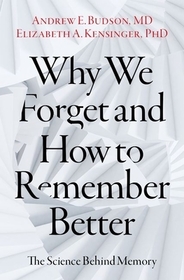
Why We Forget and How To Remember Better
The Science Behind Memory
-
10% KEDVEZMÉNY?
- A kedvezmény csak az 'Értesítés a kedvenc témákról' hírlevelünk címzettjeinek rendeléseire érvényes.
- Kiadói listaár GBP 27.49
-
13 133 Ft (12 507 Ft + 5% áfa)
Az ár azért becsült, mert a rendelés pillanatában nem lehet pontosan tudni, hogy a beérkezéskor milyen lesz a forint árfolyama az adott termék eredeti devizájához képest. Ha a forint romlana, kissé többet, ha javulna, kissé kevesebbet kell majd fizetnie.
- Kedvezmény(ek) 10% (cc. 1 313 Ft off)
- Kedvezményes ár 11 819 Ft (11 256 Ft + 5% áfa)
Iratkozzon fel most és részesüljön kedvezőbb árainkból!
Feliratkozom
13 133 Ft

Beszerezhetőség
Becsült beszerzési idő: A Prosperónál jelenleg nincsen raktáron, de a kiadónál igen. Beszerzés kb. 3-5 hét..
A Prosperónál jelenleg nincsen raktáron.
Why don't you give exact delivery time?
A beszerzés időigényét az eddigi tapasztalatokra alapozva adjuk meg. Azért becsült, mert a terméket külföldről hozzuk be, így a kiadó kiszolgálásának pillanatnyi gyorsaságától is függ. A megadottnál gyorsabb és lassabb szállítás is elképzelhető, de mindent megteszünk, hogy Ön a lehető leghamarabb jusson hozzá a termékhez.
A termék adatai:
- Kiadó OUP USA
- Megjelenés dátuma 2023. május 25.
- ISBN 9780197607732
- Kötéstípus Keménykötés
- Terjedelem448 oldal
- Méret 235x164x35 mm
- Súly 821 g
- Nyelv angol 423
Kategóriák
Rövid leírás:
Why We Forget uses the science of memory to empower you with the knowledge you need to remember better, whether you are a college student looking to ace your next exam, a business professional preparing a presentation, or a healthcare worker needing to memorize the 600+ muscles in the human body.
TöbbHosszú leírás:
Remember things better by understanding how your memory works.
If memory is a simple thing, why does it so often go awry? Why is forgetting so common? How can you be certain about something you remember-and be wrong about it? Why is it so difficult to remember people's names? How can you study hard for an exam but not be able to recall the material on the test? In Why We Forget, Dr. Andrew Budson and Dr. Elizabeth Kensinger address these questions and more, using their years of experience to guide readers into better memory.
Why We Forget shows you how to use these answers to improve your memory. In its pages you will learn:
· How memory's most important function isn't to help you remember details from your past.
· How memory is actually a collection of different abilities.
· How you create, store, and retrieve memories of your daily life.
· Ways to control what you remember and what you forget.
· Ways to distinguish between a true and false memory.
· Effective ways to study for an exam.
· How to remember people's names, all your passwords, 50 digits of Pi, and anything else you wish.
· How memory changes in normal aging, Alzheimer's disease, depression, anxiety, PTSD, ADHD, and other disorders-including COVID brain fog.
· How exercise, nutrition, alcohol, cannabis, sleep, mindfulness, and music affect your memory.
Why We Forget uses the science of memory to empower you with the knowledge you need to remember better, whether you are a college student looking to ace your next exam, a business professional preparing a presentation, or a healthcare worker needing to memorize the 600+ muscles in the human body.
This book is an essential read for all those concerned with memory loss and should be a part of all collections in the behavioral and social sciences.
Tartalomjegyzék:
Foreword, Daniel Schacter
Preface
Part 1: All the ways to remember
Chapter 1: Memory is not one thing
Chapter 2: Travel back in time
Chapter 3: Keep it in mind
Chapter 4: Muscle memory
Chapter 5: Our store of knowledge
Chapter 6: What we remember together
Part 2: Remembering the days of our lives
Chapter 7: Do you need to try to remember?
Chapter 8: Get it into your memory - and keep it there
Chapter 9: Retrieve that memory
Chapter 10: Associate information
Chapter 11: Control what you forget and remember
Chapter 12: Are you sure that's not a false memory?
Part 3: When there is too little memory - or too much
Chapter 13: Just normal aging - or is it Alzheimer's disease?
Chapter 14: What else can go wrong with your memory
Chapter 15: When you can't forget
Chapter 16: Those who can remember everything
Part 4: How to remember better
Chapter 17: Exercise, exercise, exercise
Chapter 18: Diet, alcohol, and drugs
Chapter 19: Sleep
Chapter 20: Do the right things
Chapter 21: Use strategies
Chapter 22: Use memory aids
Chapter 23: Putting it all together
Appendix: Twelve tips to remember better
Acknowledgments
References
About the Authors
Index

