

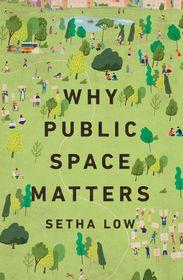
Why Public Space Matters
-
10% KEDVEZMÉNY?
- A kedvezmény csak az 'Értesítés a kedvenc témákról' hírlevelünk címzettjeinek rendeléseire érvényes.
- Kiadói listaár GBP 15.99
-
7 219 Ft (6 875 Ft + 5% áfa)
Az ár azért becsült, mert a rendelés pillanatában nem lehet pontosan tudni, hogy a beérkezéskor milyen lesz a forint árfolyama az adott termék eredeti devizájához képest. Ha a forint romlana, kissé többet, ha javulna, kissé kevesebbet kell majd fizetnie.
- Kedvezmény(ek) 10% (kb. 722 Ft)
- Kedvezményes ár 6 497 Ft (6 188 Ft + 5% áfa)
Iratkozzon fel most és részesüljön kedvezőbb árainkból!
Feliratkozom
7 219 Ft

Beszerezhetőség
Megrendelésre a kiadó utánnyomja a könyvet. Rendelhető, de a szokásosnál kicsit lassabban érkezik meg.
Why don't you give exact delivery time?
A beszerzés időigényét az eddigi tapasztalatokra alapozva adjuk meg. Azért becsült, mert a terméket külföldről hozzuk be, így a kiadó kiszolgálásának pillanatnyi gyorsaságától is függ. A megadottnál gyorsabb és lassabb szállítás is elképzelhető, de mindent megteszünk, hogy Ön a lehető leghamarabb jusson hozzá a termékhez.
A termék adatai:
- Kiadó OUP USA
- Megjelenés dátuma 2025. február 11.
- ISBN 9780197800898
- Kötéstípus Puhakötés
- Terjedelem336 oldal
- Méret 236x156x20 mm
- Súly 526 g
- Nyelv angol
- Illusztrációk 12 562
Kategóriák
Rövid leírás:
Public spaces are vital to a healthy civic life. Even fleeting interactions in such places tend to expand people's horizons. Sidewalks, plazas, public parks, central squares, and public libraries all enhance public life in unique ways. Yet, as Setha Low details in Why Public Space Matters, we are losing public spaces to urban development and the belief that public spaces are expendable. Just as important is the broad and ongoing corporate privatization of public space. This book explores why public spaces are so vitally important today and what we can do about protecting these essential places.
TöbbHosszú leírás:
Drawing from decades of research, Setha Low shows how public space contributes to a flourishing society through promoting social justice and democratic practices. Thriving public spaces also enhance creativity, health, urban resilience, and environmental sustainability. Yet more than ever, public spaces across the world are threatened by urban development, privatization and neglect.
Public spaces -- where people from all walks of life play, work, meet, talk, read, think, debate, and protest -- are vital to a healthy civic life. And, as the eminent scholar of public space Setha Low argues in Why Public Space Matters, even fleeting moments of visibility and encounter in these spaces tend to foster a broader worldview and our willingness to accept difference. Such experiences also enhance flexible thinking, problem solving, creativity, and inclusiveness. There are many such spaces, but they all enhance social life. Sidewalks and plazas offer business opportunities for small-scale entrepreneurs who cannot afford store space. Public parks have long provided major cultural attractions, from plays to concerts, at little or no cost to the public. Central squares have a storied tradition as arenas for demonstrations and political protests. Parks and waterways create sustainable greenways, and during disasters, all manner of public spaces become centers for food delivery and shelter. To illustrate their value, Low draws from decades of research in public spaces across the Americas, from New York to Costa Rica.
Yet we are losing public spaces to accelerated urban development and the belief that public spaces are expendable. Just as important is the broad-scale and ongoing privatization of public space by corporate actors. Low explores why public spaces matter today, how they are at risk, and what we can do about protecting these essential places that support our everyday lives. Finally, she shows how we can work to promote public space protection and expansion at both the grassroots and global levels. Throughout, she focuses on real public spaces and the people who use them in cities and regions across the Americas, from New Jersey to Costa Rica. A powerful, defining statement on a foundational contributor to healthy civic life, Low's book not only details what we are at risk of losing, but shows us how we can not only stop the losses, but work to expand the number of spaces available to the public.
Building on her groundbreaking earlier works, Low astutely describes public spaces as 'infrastructures of inclusion and exclusion,' where people, politics and place converge and connect, opening spaces for the negotiation and contestation of new public cultures. Focusing on contemporary issues such as racial injustice, climate change, socioeconomic and class inequality, she details ways that public space contributes to the flourishing of individuals, communities, cities and societies
Tartalomjegyzék:
List of Illustrations
Acknowledgements
Chapter 1. Why Does Public Space Matter?
Chapter 2. What is Public Space?
Chapter 3. What if Jones Beach Was Not Public: Social Justice and Belonging on Long Island, New York
Chapter 4. Rebuilding a Bridge and a Community: Health and Resilience at Walkway Over Hudson, Poughkeepsie, New York
Chapter 5. Playing in the Fields of Lake Welch, New Jersey
Chapter 6. Improvising Public Space and the Informal Economy: Sidewalks, Streets and Markets in Buenos Aires, New York City, and Baguio City
Chapter 7. Green Guerillas, Seed Bombs and Granite Gardens: Environmental Sustainability and Public Space in Paris and New York City
Chapter 8. Place attachment and Cultural Identity: Monuments, Parks and Neighborhood Public Space in San José, Costa Rica, and the Statue of Liberty and Battery Park City in New York City
Chapter 9. From the Winter of Despair to the Summer of Euphoria: Public Space During COVID-19 in New York City (2020-2021)
Chapter 10. How to Study Public Space: The Toolkit for the Ethnographic Study of Space (TESS) in Tompkins Square Park, Manhattan, New York City and Other Strategies
Appendices
Appendix 1. Contact, Public Culture and Affect Atmospheres: A Theoretical Framework
Notes
Index

