

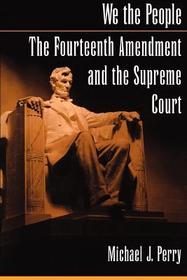
We the People
The Fourteenth Amendment and the Supreme Court
-
10% KEDVEZMÉNY?
- A kedvezmény csak az 'Értesítés a kedvenc témákról' hírlevelünk címzettjeinek rendeléseire érvényes.
- Kiadói listaár GBP 28.99
-
13 088 Ft (12 465 Ft + 5% áfa)
Az ár azért becsült, mert a rendelés pillanatában nem lehet pontosan tudni, hogy a beérkezéskor milyen lesz a forint árfolyama az adott termék eredeti devizájához képest. Ha a forint romlana, kissé többet, ha javulna, kissé kevesebbet kell majd fizetnie.
- Kedvezmény(ek) 10% (kb. 1 309 Ft)
- Kedvezményes ár 11 779 Ft (11 219 Ft + 5% áfa)
Iratkozzon fel most és részesüljön kedvezőbb árainkból!
Feliratkozom
13 088 Ft

Beszerezhetőség
Megrendelésre a kiadó utánnyomja a könyvet. Rendelhető, de a szokásosnál kicsit lassabban érkezik meg.
Why don't you give exact delivery time?
A beszerzés időigényét az eddigi tapasztalatokra alapozva adjuk meg. Azért becsült, mert a terméket külföldről hozzuk be, így a kiadó kiszolgálásának pillanatnyi gyorsaságától is függ. A megadottnál gyorsabb és lassabb szállítás is elképzelhető, de mindent megteszünk, hogy Ön a lehető leghamarabb jusson hozzá a termékhez.
A termék adatai:
- Kiadó OUP USA
- Megjelenés dátuma 2001. november 29.
- ISBN 9780195151251
- Kötéstípus Puhakötés
- Terjedelem288 oldal
- Méret 224x165x15 mm
- Súly 399 g
- Nyelv angol 0
Kategóriák
Rövid leírás:
In his new book, Michael Perry evaluates the grave charge that the modern Supreme Court has engineered a "judicial usurpation of politics". In particular, Perry inquires which of the several Fourteenth Amendment conflicts---the conflicts over race segregation, race-based affirmative action, sex-based discrimination, homosexuality, abortion, and physician-assisted suicide---have been resolved as they should have been resolved. Perry lays the necessary groundwork for his inquiry by addressing both questions of constitutional theory and questions of constitutional history.
TöbbHosszú leírás:
In his new book, Michael Perry evaluates the grave charge that the modern Supreme Court has engineered a "judicial usurpation of politics". In particular, Perry inquires which of the several Fourteenth Amendment conflicts---the conflicts over race segregation, race-based affirmative action, sex-based discrimination, homosexuality, abortion, and physician-assisted suicide---have been resolved as they should have been resolved. Perry lays the necessary groundwork for his inquiry by addressing both questions of constitutional theory and questions of constitutional history.
Perry has written an ambitious, thoughtful, and provocative book that combines theoretical analysis of interpretation of the Fourteenth Amendment with nuanced discussions of several specific constitutional cases. It is a worthy addition to the large and diverse scholarly literature on the Fourteenth Amendment.--Perspectives on Politics Science

