

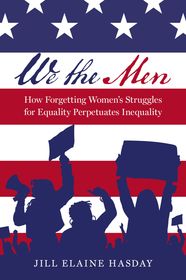
We the Men
How Forgetting Women's Struggles for Equality Perpetuates Inequality
-
10% KEDVEZMÉNY?
- A kedvezmény csak az 'Értesítés a kedvenc témákról' hírlevelünk címzettjeinek rendeléseire érvényes.
- Kiadói listaár GBP 23.99
-
10 831 Ft (10 315 Ft + 5% áfa)
Az ár azért becsült, mert a rendelés pillanatában nem lehet pontosan tudni, hogy a beérkezéskor milyen lesz a forint árfolyama az adott termék eredeti devizájához képest. Ha a forint romlana, kissé többet, ha javulna, kissé kevesebbet kell majd fizetnie.
- Kedvezmény(ek) 10% (kb. 1 083 Ft)
- Kedvezményes ár 9 748 Ft (9 284 Ft + 5% áfa)
Iratkozzon fel most és részesüljön kedvezőbb árainkból!
Feliratkozom
10 831 Ft

Beszerezhetőség
Megrendelésre a kiadó utánnyomja a könyvet. Rendelhető, de a szokásosnál kicsit lassabban érkezik meg.
Why don't you give exact delivery time?
A beszerzés időigényét az eddigi tapasztalatokra alapozva adjuk meg. Azért becsült, mert a terméket külföldről hozzuk be, így a kiadó kiszolgálásának pillanatnyi gyorsaságától is függ. A megadottnál gyorsabb és lassabb szállítás is elképzelhető, de mindent megteszünk, hogy Ön a lehető leghamarabb jusson hozzá a termékhez.
A termék adatai:
- Kiadó OUP USA
- Megjelenés dátuma 2025. július 23.
- ISBN 9780197800805
- Kötéstípus Keménykötés
- Terjedelem310 oldal
- Méret 241x165x31 mm
- Súly 531 g
- Nyelv angol 606
Kategóriák
Rövid leírás:
Too many of the stories that powerful Americans tell about law and society include only 'We the Men." A long line of judges, politicians, and other influential scene setters have ignored women's struggles for equality or even claimed that the United States has already left sex discrimination behind. Jill Hasday's We the Men is the first book to explore how forgetting women's struggles for equality--and forgetting the work America still has to do on this front--perpetuates injustice, promotes complacency, and denies how generations of women have had to fight for reform.
TöbbHosszú leírás:
In a nation whose Constitution purports to speak for "We the People", too many of the stories that powerful Americans tell about law and society include only We the Men. A long line of judges, politicians, and other influential voices have ignored women's struggles for equality or distorted them beyond recognition by wildly exaggerating American progress. Even as sexism continues to warp constitutional law, political decision making, and everyday life, prominent Americans have spent more than a century proclaiming that the United States has already left sex discrimination behind.
Jill Elaine Hasday's We the Men is the first book to explore how forgetting women's struggles for equality—and forgetting the work America still has to do—perpetuates injustice, promotes complacency, and denies how generations of women have had to come together to fight for reform and against regression. Hasday argues that remembering women's stories more often and more accurately can help the nation advance toward sex equality. These stories highlight the persistence of women's inequality and make clear that real progress has always required women to disrupt the status quo, demand change, and duel with determined opponents.
America needs more conflict over women's status rather than less. Conflict has the power to generate forward momentum. Patiently awaiting men's spontaneous enlightenment does not. Transforming Americas dominant stories about itself can reorient our understanding of how women's progress takes place, focus our attention on the battles that are still unwon, and fortify our determination to push for a more equal future.
'Professor Hasday declares bracingly at the outset of her marvelous book that “In a nation whose constitution purports to speak for 'we the people,' too many of the stories that powerful Americans tell about law and society include only we the men.” She convincingly documents her charge, persuasively shows the damage to which she objects, and, most importantly, inspires her readers to be more attentive and demanding.'
Randall Kennedy, Michael R. Klein Professor of Law, Harvard Law School
Tartalomjegyzék:
Forgotten Women
Part I. Erasure
Courts Ignore Women's Struggles for Equality
Remembering America without Remembering Women
Part II. Distortion
Courts Declare Victory Early and Often
Popular Culture Announces Women's Emancipation
Part III. Consequences
Courts Protect and Perpetuate Inequality
Anti-Feminists Capitalize on America's Misremembered Past
Part IV. Hope
Building on the Past to Create a More Equal Future
Notes
Acknowledgments
Index

