

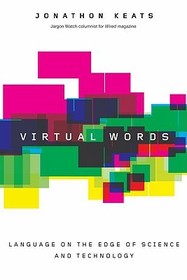
Virtual Words
Language from the Edge of Science and Technology
-
10% KEDVEZMÉNY?
- A kedvezmény csak az 'Értesítés a kedvenc témákról' hírlevelünk címzettjeinek rendeléseire érvényes.
- Kiadói listaár GBP 15.99
-
7 219 Ft (6 875 Ft + 5% áfa)
Az ár azért becsült, mert a rendelés pillanatában nem lehet pontosan tudni, hogy a beérkezéskor milyen lesz a forint árfolyama az adott termék eredeti devizájához képest. Ha a forint romlana, kissé többet, ha javulna, kissé kevesebbet kell majd fizetnie.
- Kedvezmény(ek) 10% (kb. 722 Ft)
- Kedvezményes ár 6 497 Ft (6 188 Ft + 5% áfa)
Iratkozzon fel most és részesüljön kedvezőbb árainkból!
Feliratkozom
7 219 Ft

Beszerezhetőség
Megrendelésre a kiadó utánnyomja a könyvet. Rendelhető, de a szokásosnál kicsit lassabban érkezik meg.
Why don't you give exact delivery time?
A beszerzés időigényét az eddigi tapasztalatokra alapozva adjuk meg. Azért becsült, mert a terméket külföldről hozzuk be, így a kiadó kiszolgálásának pillanatnyi gyorsaságától is függ. A megadottnál gyorsabb és lassabb szállítás is elképzelhető, de mindent megteszünk, hogy Ön a lehető leghamarabb jusson hozzá a termékhez.
A termék adatai:
- Kiadó OUP USA
- Megjelenés dátuma 2010. november 11.
- ISBN 9780195398540
- Kötéstípus Keménykötés
- Terjedelem190 oldal
- Méret 145x211x22 mm
- Súly 346 g
- Nyelv angol 0
Kategóriák
Rövid leírás:
Jonathon Keats's eagerly awaited monthly 'Jargon Watch' column in Wired Magazine discusses the remarkable new coinages that technology is bringing into the language, such as sock puppet (an illicit online alternate identity), in vitro meat (chicken and beef grown in a laboratory), and unparticle (a form of matter lacking definite mass). In Virtual Words, Keats provides an enthralling exploration of how such words and phrases enter the language, what relationship they have to their subject matter, and why some, like blog, succeed while others, like flog (a fake web log), fail.
TöbbHosszú leírás:
The technological realm provides an unusually active laboratory not only for new ideas and products but also for the remarkable linguistic innovations that accompany and describe them. How else would words like qubit (a unit of quantum information), sock puppet (an illicit online alternate identity), or in vitro meat (chicken and beef grown in a laboratory) enter our language?
In Virtual Words: Language from the Edge of Science and Technology, Jonathon Keats, author of Wired Magazine's monthly Jargon Watch column, investigates the interplay between words and ideas in our fast-paced tech-driven use-it-or-lose-it society. In 45 illuminating short essays, Keats examines how such words get coined, what relationship they have to their subject matter, and why some, like blog, succeed while others, like flog, fail. Divided into broad categories--such as euphemism, polemic, jargon, and slang, in addition to scientific and technological neologisms--chapters each consider one exemplary word, its definition, origin, context, and significance. Examples range from cybrid (a human-animal hybrid embryo) and unparticle (a form of matter lacking definite mass) to gene foundry (a laboratory where microbes are built) and blackhawk (a combative helicopter parent). Together these words provide not only a survey of technological invention and its consequences, but also a fascinating glimpse of novel language as it comes into being.
No one knows this emerging lexical terrain better than Jonathon Keats, and in writing that is as inventive and engaging as the language it describes, Virtual Words offers endless delights for word-lovers, technophiles, and anyone intrigued by the essential human obsession with naming.
Keat's survey of the ways in which science and technology shape language is clever and humorous.

