

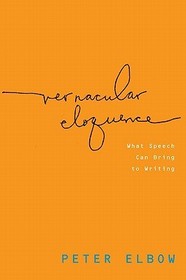
Vernacular Eloquence
What Speech Can Bring to Writing
-
10% KEDVEZMÉNY?
- A kedvezmény csak az 'Értesítés a kedvenc témákról' hírlevelünk címzettjeinek rendeléseire érvényes.
- Kiadói listaár GBP 19.99
-
9 025 Ft (8 595 Ft + 5% áfa)
Az ár azért becsült, mert a rendelés pillanatában nem lehet pontosan tudni, hogy a beérkezéskor milyen lesz a forint árfolyama az adott termék eredeti devizájához képest. Ha a forint romlana, kissé többet, ha javulna, kissé kevesebbet kell majd fizetnie.
- Kedvezmény(ek) 10% (kb. 903 Ft)
- Kedvezményes ár 8 122 Ft (7 736 Ft + 5% áfa)
Iratkozzon fel most és részesüljön kedvezőbb árainkból!
Feliratkozom
9 025 Ft

Beszerezhetőség
Megrendelésre a kiadó utánnyomja a könyvet. Rendelhető, de a szokásosnál kicsit lassabban érkezik meg.
Why don't you give exact delivery time?
A beszerzés időigényét az eddigi tapasztalatokra alapozva adjuk meg. Azért becsült, mert a terméket külföldről hozzuk be, így a kiadó kiszolgálásának pillanatnyi gyorsaságától is függ. A megadottnál gyorsabb és lassabb szállítás is elképzelhető, de mindent megteszünk, hogy Ön a lehető leghamarabb jusson hozzá a termékhez.
A termék adatai:
- Kiadó OUP USA
- Megjelenés dátuma 2012. február 23.
- ISBN 9780199782512
- Kötéstípus Puhakötés
- Terjedelem456 oldal
- Méret 231x155x33 mm
- Súly 590 g
- Nyelv angol
- Illusztrációk 7 illustrations 0
Kategóriák
Rövid leírás:
A writing guide for the twenty-first century, Vernacular Eloquence explores how the variety of ways the spoken word can enhance the written word, drawing on examples from blogs, email, and other recent trends.
TöbbHosszú leírás:
Since the publication of his groundbreaking books Writing Without Teachers and Writing with Power, Peter Elbow has revolutionized the way we think about writing. As a theorist, teacher, and uncommonly engaging writer himself, he has long championed our innate ability to write effectively.
Now, in Vernacular Eloquence, Elbow turns his attention to the role of the spoken word in writing. He begins by questioning the basic cultural assumption that speaking and writing are two very different, incompatible modes of expression, and that we should keep them separate. The book explores the many linguistic and rhetorical virtues of speech--spontaneity, naturalness of expression, fluidity of thought--to show that many of these virtues can usefully be brought to writing. Elbow suggests that we begin the writing process by "speaking " our words onto the page, letting the words and ideas flow without struggling to be "correct. " Speaking can help us at the later stages of writing, too, as we read drafts aloud and then revise until the language feels right in the mouth and sounds right in the ear. The result is stronger, clearer, more natural writing that avoids the stilted, worried-over quality that so often alienates (and bores) the reader. Elbow connects these practices to a larger theoretical discussion of literacy in our culture, arguing that our rules for correct writing make it harder than necessary to write well. In particular, our culture's conception of proper writing devalues the human voice, the body, and the linguistic power of people without privilege.
Written with Elbow's customary verve and insight, Vernacular Eloquence shows how to bring the pleasures we all enjoy in speaking to the all-too-often needlessly arduous task of writing.
Elbow is his own best argument for speaking onto the page: His voice is both authoritative and affable, conversational and professorial.
Tartalomjegyzék:
PART ONE. What's Best in Speaking And Writing?
Introduction: Defining "Speech" and "Writing"
1. Speech and Writing as They Are Used: The Role of Culture
2. What's Good about Writing
3. Speaking as a Process: What Can It Offer Writing?
4. Speech as a Product: Eight Virtues in Careless Spoken Language that Careful Writing Needs
5. Intonation: A Virtue for Writing Found at the Root of Everyday Speech
6. Can We Really Have the Best of Both Worlds?
PART TWO. A Role for the Tongue During the Early Stages of Writing: Treating Speech as Writing
Introduction: More Defining
7. What is Speaking Onto the Page and How Does Freewriting Teach it?
8. Where Else Do We See Unplanned Speaking onto the Page?
9. Objections to Speaking onto the Page--And Responses
10. The Need for Care: Unplanned Speaking onto the Page is Never Enough
PART THREE. A Role for the Tongue During Late Revising: Reading Aloud and Treating Writing as Speech
Introduction
11. Revising by Reading Aloud. What the Mouth and the Ear Know
12. How Does Revising by Reading Aloud Actually Work?
13. Punctuation: Living with Two Traditions
14. Good Enough Punctuation by Reading Aloud and Listening
15. How Speech Can Improve Organization in Writing: Form as Energy
16. Summary Chapter: The Benefits of Speaking onto the Page and Reading Aloud
PART FOUR. Vernacular Literacy
Introduction: Dante and Vulgar Eloquence
17. Our Present Culture of Proper Literacy and How It Tries To Exclude Speech
18. A New Culture of Vernacular Literacy is on the Horizon
Appendix I. How Freewriting Went from Dangerous to No Big Deal in the Composition and Rhetoric Community
Appendix II. A list of Publications Written in Nonprestige Nonstandard Versions of English
Appendix III. A List of Published Works by Peter Elbow

