

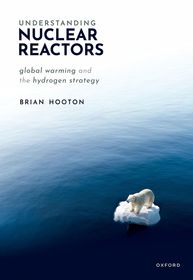
Understanding Nuclear Reactors
Global Warming and the Hydrogen Strategy
-
10% KEDVEZMÉNY?
- A kedvezmény csak az 'Értesítés a kedvenc témákról' hírlevelünk címzettjeinek rendeléseire érvényes.
- Kiadói listaár GBP 24.99
-
11 282 Ft (10 745 Ft + 5% áfa)
Az ár azért becsült, mert a rendelés pillanatában nem lehet pontosan tudni, hogy a beérkezéskor milyen lesz a forint árfolyama az adott termék eredeti devizájához képest. Ha a forint romlana, kissé többet, ha javulna, kissé kevesebbet kell majd fizetnie.
- Kedvezmény(ek) 10% (kb. 1 128 Ft)
- Kedvezményes ár 10 154 Ft (9 671 Ft + 5% áfa)
Iratkozzon fel most és részesüljön kedvezőbb árainkból!
Feliratkozom
11 282 Ft

Beszerezhetőség
Becsült beszerzési idő: A Prosperónál jelenleg nincsen raktáron, de a kiadónál igen. Beszerzés kb. 3-5 hét..
A Prosperónál jelenleg nincsen raktáron.
Why don't you give exact delivery time?
A beszerzés időigényét az eddigi tapasztalatokra alapozva adjuk meg. Azért becsült, mert a terméket külföldről hozzuk be, így a kiadó kiszolgálásának pillanatnyi gyorsaságától is függ. A megadottnál gyorsabb és lassabb szállítás is elképzelhető, de mindent megteszünk, hogy Ön a lehető leghamarabb jusson hozzá a termékhez.
A termék adatai:
- Kiadó OUP Oxford
- Megjelenés dátuma 2024. május 20.
- ISBN 9780198902669
- Kötéstípus Puhakötés
- Terjedelem176 oldal
- Méret 246x170x8 mm
- Súly 348 g
- Nyelv angol
- Illusztrációk 49 line drawings 488
Kategóriák
Rövid leírás:
Understanding Nuclear Reactors gives a non-mathematical understanding of how nuclear reactors operate, discussing safety protocols and the lessons to be learned from the incidents at Three Mile Island and Chernobyl. The book covers Global Warming, the alternatives to fossil fuel, such as solar, wind, geothermal and, of course, nuclear.
TöbbHosszú leírás:
Understanding Nuclear Reactors provides a non-mathematical understanding of how nuclear reactors operate. It describes the components, the Pressure Vessel, the Pressuriser to control the pressure in a Pressurised Water Reactor (PWR), and the Steam Generator and it also explains how the chain reaction is controlled in the day-to-day operations in the Control Room. What goes on elsewhere in the nuclear fuel cycle, mining, enrichment, fuel manufacturer, spent fuel management, and reprocessing are also covered in detail.
The book tells a set of historical stories about the development of the physics behind reactors and the discovery of fission and explains the hopes for the development of Generation IV reactors. Special attention is given to the safety of reactors and the lessons to be learned from the incidents at Three Mile Island, Browns Ferry, Chernobyl, and Fukushima. Hooton uses a set of stories to explain the invisible hazard of radiation on the human body.
Global warming was the motivation for the book, so Hooton offers a detailed account of alternative energy sources to fossil fuel, solar panels, wind turbines, geothermal, as well as nuclear. He gives a detailed account of all the current developments in nuclear fusion as a future prospect for the production of electricity. The hydrogen strategy is emerging, and may become a revolution, but it is a very subtle partner in the quest for net zero, so he includes a detailed account of how it fits into the plan to defeat Global warming.
It is an excellent read and, while only about 150 pages it is packed with essential information, with 13 chapters each containing a comprehensive index.
Tartalomjegyzék:
1. Introduction and Prelude
Global Warming
Capacity Factors
Welcome to the Nuclear Age
The First Electricity Producing Reactors
The Prelude
2. Fundamental Nuclear Physics
The Pauli Exclusion Principle
Nuclear Forces
Nuclear Reactions
Energy and Mass Units
Photons
Antimatter, Pair Production, and Annihilation
Mass Defects, Q Values, and Cross-Sections
Cross-Sections
The Discovery of Radioactivity
The General Characteristics of Radioactivity
Gamma Decay
Spontaneous Fission
3. Basic Quantum Theory
Skip this Chapter if you Wish
The Uncertainty Principle
The Theoretical Treatment of Nuclear Physics
Atomic Spectra and Quantum Numbers
Sommerfeld's Contribution
Pauli's Contribution
Spin and Parity
Alpha Decay
Beta Decay and the Story of the Neutrino
The Discovery of the Neutron
Quantum Theory and Beyond
4. The Story of E = MC2 and Relativity
The Unification of Electricity and Magnetism
Relative Motion
Einstein's Theory
Standards of Mass, Length, and Time
5. The Fission Process and the Characteristics of Fission
The Discovery of Fission
Niels Bohr and Copenhagen
The Fission Process
Neutron Interactions
The Fate of Gamma Rays
Fission Fragments
Delayed Neutrons
The Energy of Fission
Decay Heat
The Chain Reaction
6. Nuclear Reactors in General
Nuclear Reactor Calculations
The Growth of the Neutron Population
The Six Factor Formula
The Effect of Delayed Neutrons on Reactor Control
Reactivity
Monte Carlo Models
Nuclear Reactor Operations
Fuel
Moderators
Coolants
Poisons
Control Poisons
Unavoidable Poisons
Burnable Poisons
Engineering Materials
The Fast Reactor
Hybrid Reactors
7. Reactor Operations and Control
Controlling Reactors to Keep them Safe
The First Reactors
Reactor CP1
Controlling Commercial Reactors
The Reactor Pressure Vessel
The Reactor Coolant Pump
The Pressuriser
The Steam Generator
The Boron Loading Loop
Power Measurement
The Fuel Temperature Coefficient (FTC)
The Moderator Temperature Coefficient (MTC)
The Void Coefficient
Changes In Steam Demand
Control Room Operations
8. Safety
Safety, Risk, and Consequences
The Regulators
Decay Heat Removal
Loss of Coolant
Passive Safety Measures
The Windscale Fire
Brown's Ferry
Three Mile Island
Chernobyl 1986
Problems in the Fukushima Region of Japan
Safety Overview
Understanding the Health Hazard of Radiation
9. The Nuclear Fuel Cycle
The Nuclear Fuel Cycle Definition
Mining
Enrichment
Fuel Fabrication
Spent Fuel Management
Spent Fuel Ponds
Cherenkov Radiation
Reprocessing
Nuclear Waste
10. International Treaties and Obligations
Euratom
Treaty on the Non-Proliferation of Nuclear Weapons, NPT
The International Atomic Energy Agency, IAEA
Nuclear Safeguards
Obligations
11. The Future of Fission Reactors and Fusion
The Alternatives to Fossil Fuel
Generation IV Technology
The Move to Higher Temperatures
The Move to Fast Reactors
The Move to SMRs and AMRs
Plutonium Breeding
Thorium Breeding
New Coolants
Molten Salts
New Types of Fuel
Burning Waste and Using the Minor Actinides as Fuel
New Reprocessing Technology
The Economics and Politics of Electricity Generation
The Utilisation of E = MC2
12. Nuclear Fusion
The Fusion Process
Producing Fusion in the Laboratory
ITER
MAST and STEP
The Fuel for Fusion
The Tritium Breeding Ratio, TBR
Venture Capital
The Conclusion on Fusion
13. The Hydrogen Strategy
The Basic Properties of Hydrogen
The Production of Hydrogen
Carbon Capture
Energy Storage
New Markets for Hydrogen
Hydrogen in the Colours of the Rainbow
The Race to Deliver Net Zero
Free

