

-
10% KEDVEZMÉNY?
- A kedvezmény csak az 'Értesítés a kedvenc témákról' hírlevelünk címzettjeinek rendeléseire érvényes.
- Kiadói listaár GBP 42.00
-
18 963 Ft (18 060 Ft + 5% áfa)
Az ár azért becsült, mert a rendelés pillanatában nem lehet pontosan tudni, hogy a beérkezéskor milyen lesz a forint árfolyama az adott termék eredeti devizájához képest. Ha a forint romlana, kissé többet, ha javulna, kissé kevesebbet kell majd fizetnie.
- Kedvezmény(ek) 10% (cc. 1 896 Ft off)
- Kedvezményes ár 17 067 Ft (16 254 Ft + 5% áfa)
Iratkozzon fel most és részesüljön kedvezőbb árainkból!
Feliratkozom
18 963 Ft

Beszerezhetőség
Bizonytalan a beszerezhetőség. Érdemes még egyszer keresni szerzővel és címmel. Ha nem talál másik, kapható kiadást, forduljon ügyfélszolgálatunkhoz!
Why don't you give exact delivery time?
A beszerzés időigényét az eddigi tapasztalatokra alapozva adjuk meg. Azért becsült, mert a terméket külföldről hozzuk be, így a kiadó kiszolgálásának pillanatnyi gyorsaságától is függ. A megadottnál gyorsabb és lassabb szállítás is elképzelhető, de mindent megteszünk, hogy Ön a lehető leghamarabb jusson hozzá a termékhez.
A termék adatai:
- Kiadó OUP Oxford
- Megjelenés dátuma 2007. november 8.
- ISBN 9780198565963
- Kötéstípus Puhakötés
- Terjedelem238 oldal
- Méret 245x188x13 mm
- Súly 563 g
- Nyelv angol
- Illusztrációk 36 line, 10 halftone, 26 colour illustrations 0
Kategóriák
Rövid leírás:
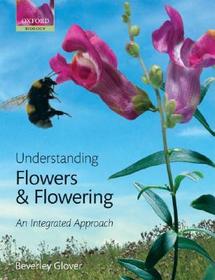
This book provides an overview of the biology of flowers and considers how plants decide when to make flowers and how floral organs develop. It looks at why different shapes and colours exist, relating floral development to pollination biology. The breadth of coverage makes this an ideal choice for anyone interested in any aspect of floral biology.
TöbbHosszú leírás:
Flowers are the beautiful and complex reproductive structures of the angiosperms, one of the most diverse and successful groups of living organisms. The underlying thesis of this book is that to fully understand plant development (and why flowers differ in shape, structure and colour), it is necessary to understand why it is advantageous for them to look like they do. Conversely, in order to fully understand plant ecology, it is necessary to appreciate how floral
structures have adapted and evolved. Uniquely, this book addresses flowers and flowering from both a molecular genetic perspective (considering flower induction, development and self-incompatibility) and an ecological perspective (looking at the selective pressures placed on plants by pollinators, and
the consequences for animal-plant co-evolution).
Understanding Flowers and Flowering first considers the evolution of flowers and the history of research into their development. This is followed by a detailed description of the processes which lead to flower production in model plants. The book then examines how flowers differ in shape, structure and colour, and how these differences are generated. Finally it assesses the role of these various aspects of floral biology in attracting pollinators and ensuring successful reproduction.
In so doing, it provides the first truly integrated study of the topic - one that discusses both the how? and why? of flowering plant reproductive biology.
The breadth of coverage and integrated approach makes this advanced textbook an ideal choice for anyone interested in any aspect of floral biology. It will be particularly suitable for graduate level students taking courses in plant development, ecology, evolution, and reproductive biology.
Flowers and Flowering is a well written text that would well serve undergraduates, early graduate students , or anyone with a solid biology background who is interested in floral biology.
Tartalomjegyzék:
INTRODUCTION
The Evolution of Flowers
Historical Interpretations of Flower Induction and Flower Development
THE MOLECULAR MECHANISMS OF FLOWERING: INDUCTION AND DEVELOPMENT
Flower induction in Arabidopsis thaliana
The autonomous pathways for floral inhibition and induction
The photoperiodic pathway of floral induction
The vernalization pathway of floral induction and the role of gibberellin
Integrating the Arabidopsis thaliana flower induction pathways and assessing the extent to which the model is ubiquitous
Changes at the shoot apical meristem in response to floral induction
Development of the floral organs
The ABC model in evolution
Development of gametes
Preventing self-fertilisation
POLLINATION SUCCESS: MOLECULAR AND ECOLOGICAL INTERACTIONS
Why are flowers different? Pollination syndromes - the theory
Changing floral shape and structure
Colouring the flower
Enhancing flower colour
Are flowers under selective pressure to increase pollinator attention?
Do pollinators discriminate between different floral forms?
Pollination syndromes - the evidence
Epilogue
Bibliography

