

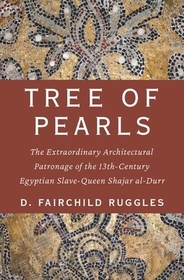
Tree of Pearls
The Extraordinary Architectural Patronage of the 13th-Century Egyptian Slave-Queen Shajar al-Durr
-
10% KEDVEZMÉNY?
- A kedvezmény csak az 'Értesítés a kedvenc témákról' hírlevelünk címzettjeinek rendeléseire érvényes.
- Kiadói listaár GBP 33.99
-
15 346 Ft (14 615 Ft + 5% áfa)
Az ár azért becsült, mert a rendelés pillanatában nem lehet pontosan tudni, hogy a beérkezéskor milyen lesz a forint árfolyama az adott termék eredeti devizájához képest. Ha a forint romlana, kissé többet, ha javulna, kissé kevesebbet kell majd fizetnie.
- Kedvezmény(ek) 10% (kb. 1 535 Ft)
- Kedvezményes ár 13 811 Ft (13 154 Ft + 5% áfa)
Iratkozzon fel most és részesüljön kedvezőbb árainkból!
Feliratkozom
15 346 Ft

Beszerezhetőség
Becsült beszerzési idő: A Prosperónál jelenleg nincsen raktáron, de a kiadónál igen. Beszerzés kb. 3-5 hét..
A Prosperónál jelenleg nincsen raktáron.
Why don't you give exact delivery time?
A beszerzés időigényét az eddigi tapasztalatokra alapozva adjuk meg. Azért becsült, mert a terméket külföldről hozzuk be, így a kiadó kiszolgálásának pillanatnyi gyorsaságától is függ. A megadottnál gyorsabb és lassabb szállítás is elképzelhető, de mindent megteszünk, hogy Ön a lehető leghamarabb jusson hozzá a termékhez.
A termék adatai:
- Kiadó OUP USA
- Megjelenés dátuma 2020. június 29.
- ISBN 9780190873202
- Kötéstípus Keménykötés
- Terjedelem204 oldal
- Méret 160x236x17 mm
- Súly 522 g
- Nyelv angol
- Illusztrációk 104 illustrations, 50 in color 0
Kategóriák
Rövid leírás:
Tree of Pearls is a vivid exploration of the life of a singular woman who rose from slavery to become sultan of Egypt in the 13th century. Her achievements were the ending the Seventh Crusade, the inauguration of the Mamluk dynasty, and the building of innovative works of architecture that left an enduring mark on Cairo.
TöbbHosszú leírás:
Shajar al-Durr--known as "Tree of Pearls"--began her remarkable career as a child slave, given as property to the Ayyubid Sultan Salih of Egypt. She became his favorite concubine, was manumitted, became the sultan's wife, served as governing regent, and ultimately rose to become the legitimately appointed sultan of Egypt in 1250 after her husband's death. Shajar al-Durr used her wealth and power to add a tomb to his urban madrasa; with this innovation, madrasas and many other charitably endowed architectural complexes became commemorative monuments, a practice that remains widespread today. A highly unusual case of a Muslim woman authorized to rule in her own name, her reign ended after only three months when she was forced to share her governance with an army general from the ranks of the Mamluks (elite slave soldiers) and for political expediency to marry him.
Despite the fact that Shajar al-Durr's story ends tragically with her assassination and hasty burial, her deeds in her lifetime offer a stark alternative to the continued belief that women in the medieval period were unseen, anonymous, and inconsequential in a world that belonged to men. This biography--the first ever in English--will place the rise and fall of the sultan-queen in the wider context of the cultural and architectural development of Cairo, the city that still holds one of the largest and most important collections of Islamic monuments in the world. D. Fairchild Ruggles also situates the queen's extraordinary architectural patronage in relation to other women of her own time, such as Aleppo's Ayyubid regent. Tree of Pearls concludes with a lively discussion of what we can know about the material impact of women of both high and lesser social rank in this period, and why their impact matters in the writing of history.
By the time I finished reading the chapters on Shajar al-Durr's patronage of two tomb complexes and the concept of Matronage, I had an enriched understanding of the impact of this specific woman's actions, particularly in light of the political, military, religious and cultural world in which she lived (and died).
Tartalomjegyzék:
List of Illustrations
Acknowledgements
Note on Dates and Transliterations
Chapter 1: Who Was "Tree of Pearls"
Chapter 2: Sultans and Slaves: Salih's Rise to Power
Chapter 3: The Streets of Cairo and the Salihiyya Madrasa
Chapter 4: Crisis in Cairo: From Sultan to Sultan-Queen
Chapter 5: Commemorative Architecture and Salih's "Blessed Mausoleum"
Chapter 6: "If You Lack Men": the Shajar al-Durr's Abdication and Tomb
Chapter 7: Matronage
Appendix: Recipe for Umm 'Ali
Bibliography
Index

