

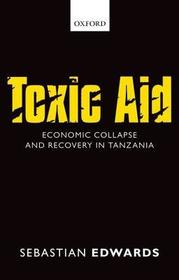
Toxic Aid
Economic Collapse and Recovery in Tanzania
-
10% KEDVEZMÉNY?
- A kedvezmény csak az 'Értesítés a kedvenc témákról' hírlevelünk címzettjeinek rendeléseire érvényes.
- Kiadói listaár GBP 26.49
-
12 655 Ft (12 052 Ft + 5% áfa)
Az ár azért becsült, mert a rendelés pillanatában nem lehet pontosan tudni, hogy a beérkezéskor milyen lesz a forint árfolyama az adott termék eredeti devizájához képest. Ha a forint romlana, kissé többet, ha javulna, kissé kevesebbet kell majd fizetnie.
- Kedvezmény(ek) 10% (cc. 1 266 Ft off)
- Kedvezményes ár 11 389 Ft (10 847 Ft + 5% áfa)
Iratkozzon fel most és részesüljön kedvezőbb árainkból!
Feliratkozom
12 655 Ft

Beszerezhetőség
Megrendelésre a kiadó utánnyomja a könyvet. Rendelhető, de a szokásosnál kicsit lassabban érkezik meg.
Why don't you give exact delivery time?
A beszerzés időigényét az eddigi tapasztalatokra alapozva adjuk meg. Azért becsült, mert a terméket külföldről hozzuk be, így a kiadó kiszolgálásának pillanatnyi gyorsaságától is függ. A megadottnál gyorsabb és lassabb szállítás is elképzelhető, de mindent megteszünk, hogy Ön a lehető leghamarabb jusson hozzá a termékhez.
A termék adatai:
- Kiadó OUP Oxford
- Megjelenés dátuma 2018. június 28.
- ISBN 9780198825524
- Kötéstípus Puhakötés
- Terjedelem316 oldal
- Méret 216x136x23 mm
- Súly 356 g
- Nyelv angol
- Illusztrációk 6 Figures, 17 Tables 0
Kategóriák
Rövid leírás:
Provides an economic history of Tanzania since independence in 1961. It covers the policies of African Socialism and the Arusha Declaration, the collapse of the early 1980s, the relationship with the IMF, and the reforms of the 1990s and 2000s.
TöbbHosszú leírás:
For many years Tanzania was the darling of international aid agencies. During the 1970s it received more assistance per capita than any other nation in the world. And yet, the economy performed dismally: growth was negative, exports collapsed, and poverty increased massively. In the mid-1980s, however, the international community changed tack and developed an approach based on conditionality and "program ownership". Since 1996 the country has grown steadily, and social conditions have improved significantly. This book provides an economic history of Tanzania since independence in 1961. It covers the policies of African Socialism and the Arusha Declaration, the collapse of the early 1980s, the rocky relationships with the IMF, and the reforms of the 1990s and 2000s. This book shows that the relationship between foreign aid economic is highly complex, and that the effect of foreign assistance on poor countries performance depends on historical circumstances, ownership of programs, and the involvement of the local communities.
Opposing sides on foreign aid fiercely debate whether it spurs growth or actually does harm. Sebastian Edwards' fascinating tale of aid in Tanzania suggests it can do both. He reminds us that the more recent success of aid and reform in Tanzania is undoing the disaster caused by aid's decades-long support of domestic tyranny and corruption. A must-read for both sides of the aid debate, or for all those who simply care about poverty.
Tartalomjegyzék:
Preface and Acknowledgements
Tanzania: Finally a Success Story?
Tanzania's Market-Oriented Reforms and Economic Performance: The "Official Story'"
The War of Ideas and Foreign Aid
The Evolution of Foreign Aid to Tanzania, 1961-2011
The Arusha Declaration, Foreign Aid, and the Crisis of 1979
Economic Collapse
Tanzania and the IMF: A Troubled Relationship
The Wheels of Aid and the First Round of Reforms, 1986-1995
A New Beginning: The Ownership of Aid Programs
The Second Wave of Reforms: Vision and Policies
Is Tanzania a Success Story?
Bibliography
Index

