

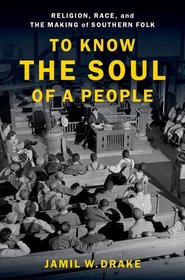
To Know the Soul of a People
Religion, Race, and the Making of Southern Folk
-
10% KEDVEZMÉNY?
- A kedvezmény csak az 'Értesítés a kedvenc témákról' hírlevelünk címzettjeinek rendeléseire érvényes.
- Kiadói listaár GBP 125.00
-
56 437 Ft (53 750 Ft + 5% áfa)
Az ár azért becsült, mert a rendelés pillanatában nem lehet pontosan tudni, hogy a beérkezéskor milyen lesz a forint árfolyama az adott termék eredeti devizájához képest. Ha a forint romlana, kissé többet, ha javulna, kissé kevesebbet kell majd fizetnie.
- Kedvezmény(ek) 10% (kb. 5 643 Ft)
- Kedvezményes ár 50 794 Ft (48 375 Ft + 5% áfa)
Iratkozzon fel most és részesüljön kedvezőbb árainkból!
Feliratkozom
56 437 Ft

Beszerezhetőség
Bizonytalan a beszerezhetőség. Érdemes még egyszer keresni szerzővel és címmel. Ha nem talál másik, kapható kiadást, forduljon ügyfélszolgálatunkhoz!
Why don't you give exact delivery time?
A beszerzés időigényét az eddigi tapasztalatokra alapozva adjuk meg. Azért becsült, mert a terméket külföldről hozzuk be, így a kiadó kiszolgálásának pillanatnyi gyorsaságától is függ. A megadottnál gyorsabb és lassabb szállítás is elképzelhető, de mindent megteszünk, hogy Ön a lehető leghamarabb jusson hozzá a termékhez.
A termék adatai:
- Kiadó OUP USA
- Megjelenés dátuma 2022. március 31.
- ISBN 9780190082680
- Kötéstípus Keménykötés
- Terjedelem288 oldal
- Méret 216x143x20 mm
- Súly 431 g
- Nyelv angol 0
Kategóriák
Rövid leírás:
To Know the Soul of a People is a history of religion and race in the agricultural South before the Civil Rights era. Jamil W. Drake chronicles a cadre of social scientists who studied the living conditions of black rural communities, framing the religious and cultural practices of the black communities as “folk” practices that needed to be reformed. Their framing of the religious cultures of rural blacks planted the seeds to the later idea of the “culture of poverty.” To Know the Soul of a People is an exciting intellectual history that invites us to explore the knowledge that catalyzed the earnest yet shortsighted liberal efforts to reform black and impoverished communities.
TöbbHosszú leírás:
To Know the Soul of a People is a history of religion and race in the agricultural South before the Civil Rights era. Jamil W. Drake chronicles a cadre of social scientists who studied the living conditions of black rural communities, revealing the abject poverty of the Jim Crow south. These university-affiliated social scientists documented shotgun houses, unsanitary privies and contaminated water, scaly hands, enlarged stomachs, and malnourished bodies. However, they also turned their attention to the spiritual possessions, chanted sermons, ecstatic singing, conjuration, dreams and visions, fortune-telling, taboos, and other religious cultures of these communities. These scholars aimed to illuminate the impoverished conditions of their subjects for philanthropic and governmental organizations, as well as the broader American public, in the first half of the 20th century, especially during the Great Depression. Religion was integral to their efforts to chart the long economic depression across the South.
From 1924 to 1941, Charles Johnson, Guy Johnson, Allison Davis, Lewis Jones, and other social scientists framed the religious and cultural practices of the black communities as “folk” practices, aiming to reform them and the broader South. Drawing on their correspondence, fieldnotes, and monographs, Drake shows that social scientists' use of “folk” reveals the religion was an important site for highlighting the supposed mental, moral, and cultural deficits of America's so-called folk population. Moreover, these social scientists did not just pioneer rural social science and reform but used their study of religion to plant the seeds of the concept that would become known as the “culture of poverty” in the latter half of the twentieth century. To Know the Soul of a People is an exciting intellectual history that invites us to explore the knowledge that animated the earnest yet shortsighted liberal efforts to reform black and impoverished communities.
Drake's well-written, important, timely examination of these pioneering studies is excellent.... Highly recommended.
Tartalomjegyzék:
Preface: The Legacy of Hampton: Folk, Religion, and Classifying the Cabin People
Introduction
Chapter 1: Moralizing the Folk: The Negro Problem, Racial Heredity, and Religion in the Progressive Era
Chapter 2: Assimilating the Folk: White Southern Liberals, Revival Religion, and Regional Isolation
Chapter 3: Medicalizing the Folk: Superstitions, Family, and Germs in the Venereal Disease Control Program
Chapter 4: Saving the Folk: Cultural Lag and the Southern Roots of the Religion of Poverty
Chapter 5: Preserving the Folk: Folk Songs and the Irony of Romanticism
Conclusion: The Aftermath of the Religion of Southern Folk
Bibliography
Index

