

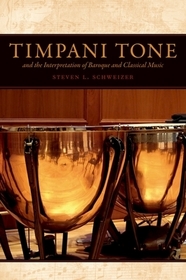
Timpani Tone and the Interpretation of Baroque and Classical Music
-
10% KEDVEZMÉNY?
- A kedvezmény csak az 'Értesítés a kedvenc témákról' hírlevelünk címzettjeinek rendeléseire érvényes.
- Kiadói listaár GBP 31.49
-
15 044 Ft (14 327 Ft + 5% áfa)
Az ár azért becsült, mert a rendelés pillanatában nem lehet pontosan tudni, hogy a beérkezéskor milyen lesz a forint árfolyama az adott termék eredeti devizájához képest. Ha a forint romlana, kissé többet, ha javulna, kissé kevesebbet kell majd fizetnie.
- Kedvezmény(ek) 10% (cc. 1 504 Ft off)
- Kedvezményes ár 13 539 Ft (12 894 Ft + 5% áfa)
Iratkozzon fel most és részesüljön kedvezőbb árainkból!
Feliratkozom
15 044 Ft

Beszerezhetőség
Megrendelésre a kiadó utánnyomja a könyvet. Rendelhető, de a szokásosnál kicsit lassabban érkezik meg.
Why don't you give exact delivery time?
A beszerzés időigényét az eddigi tapasztalatokra alapozva adjuk meg. Azért becsült, mert a terméket külföldről hozzuk be, így a kiadó kiszolgálásának pillanatnyi gyorsaságától is függ. A megadottnál gyorsabb és lassabb szállítás is elképzelhető, de mindent megteszünk, hogy Ön a lehető leghamarabb jusson hozzá a termékhez.
A termék adatai:
- Kiadó OUP USA
- Megjelenés dátuma 2010. július 15.
- ISBN 9780195395563
- Kötéstípus Puhakötés
- Terjedelem224 oldal
- Méret 231x152x17 mm
- Súly 295 g
- Nyelv angol
- Illusztrációk 13 photographs, 92 musical examples 0
Kategóriák
Rövid leírás:
In Timpani Tone and the Interpretation of Baroque and Classical Music, Steven L. Schweizer draws on 31 years of musical experience to explore the components of timpani tone and methods for producing it. Schweizer takes the reader on an odyssey through the interpretation of Bach, Handel, Haydn, and Mozart's symphonic and choral music.
TöbbHosszú leírás:
Timpani Tone and the Interpretation of Baroque and Classical Music explores the nature, production, and evolution of timpani tone and provides insights into how to interpret the music of J. S. Bach, Handel, Haydn, and Mozart. In drawing on 31 years of experience, Steven L. Schweizer focuses on the components of timpani tone and methods for producing it. In so doing, he discusses the importance of timpani bowl type; mallets; playing style; physical gestures; choice of drums; mallet grip; legato, marcato, and staccato strokes; playing different parts of the timpano head; and psychological openness to the music in effectively shaping and coloring timpani parts.
In an acclaimed chapter on interpretation, Schweizer explores how timpanists can use knowledge of the composer's style, psychology, and musical intentions; phrasing and articulation; the musical score; and a conductor's gestures to effectively and convincingly play a part with emotional dynamism and power. The greater part of the book is devoted to the interpretation of Baroque and Classical orchestral and choral music. Meticulously drawing on original sources and authoritative scores from the seventeenth through nineteenth centuries, Schweizer convincingly demonstrates that timpanists were capable of producing a broader range of timpani tone earlier than is normally supposed. The increase in timpani size, covered timpani mallets, and thinner timpani heads increased the quality of timpani tone; therefore, today's timpanist's need not be entirely concerned with playing with very articulate sticks. In exhaustive sections on Bach, Handel, Haydn, and Mozart, Schweizer takes the reader on an odyssey through the interpretation of their symphonic and choral music.
Relying on Baroque and Classical performance practices, timpani notation, the composer's musical style, and definitive scores, he interprets timpani parts from major works of these composers. Schweizer pays particular attention to timpani tone, articulation, phrasing, and dynamic contouring: elements necessary to effectively communicate their part to listeners.
Ideally positioned to offer latter-day performers and scholars an up-to-date view of the developments in knowledge concerning 17th- and 18th-century music. The author is an accomplished timpanist, and the book takes advantage of technology to offer not only brief audio clips demonstrating the tone produced by various timpani techniques, but also 30 annotated timpani parts that detail Schweizers interpretation of select works or portions thereof... Generously illustrated and logically organized... readers will find up-to-date explanations of issues that, in most cases, have been central to timpani performance throughout history.
Tartalomjegyzék:
Symbols and markings
About the Companion Website
Theory and Practice of Timpani Tone Production
The Timpani
Acoustics of the Timpani
Timpani Mallets
Playing Style
Timpani Heads
Playing the Head
Playing the Head: Techniques
Changing Tone by Changing the Grip
Stick Selection and Tone Production
Using Physical Gestures to Color Tone
Choice of Drums
Playing In and Around the Playing Spot
Tone Producing Strokes
The Grip
Psychological Openness to Music
The Theory of Contrast
Conclusion
Musical Interpretation and the Timpanist
The Composer's Style, Psychology, and Intentions
Phrasing and Articulation
Creating Emotion
Aids in Interpreting Music
Interpretation of Baroque Music
Timpani, Mallets and Tone in the Baroque and Classsical Eras
Technical Considerations in Interpreting Baroque Music (1650-1750)
Henry Purcell and Johann Sebastian Bach
George Frideric Handel

