

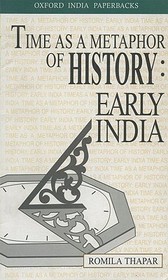
Time as a Metaphor of History: Early India
The Krishna Bharadwaj Memorial Lecture
-
10% KEDVEZMÉNY?
- A kedvezmény csak az 'Értesítés a kedvenc témákról' hírlevelünk címzettjeinek rendeléseire érvényes.
- Kiadói listaár GBP 6.99
-
3 155 Ft (3 005 Ft + 5% áfa)
Az ár azért becsült, mert a rendelés pillanatában nem lehet pontosan tudni, hogy a beérkezéskor milyen lesz a forint árfolyama az adott termék eredeti devizájához képest. Ha a forint romlana, kissé többet, ha javulna, kissé kevesebbet kell majd fizetnie.
- Kedvezmény(ek) 10% (kb. 315 Ft)
- Kedvezményes ár 2 840 Ft (2 705 Ft + 5% áfa)
Iratkozzon fel most és részesüljön kedvezőbb árainkból!
Feliratkozom
3 155 Ft

Beszerezhetőség
Csak rendelésre kapható a kiadónál, kissé időigényes.
Why don't you give exact delivery time?
A beszerzés időigényét az eddigi tapasztalatokra alapozva adjuk meg. Azért becsült, mert a terméket külföldről hozzuk be, így a kiadó kiszolgálásának pillanatnyi gyorsaságától is függ. A megadottnál gyorsabb és lassabb szállítás is elképzelhető, de mindent megteszünk, hogy Ön a lehető leghamarabb jusson hozzá a termékhez.
A termék adatai:
- Kiadó OUP India
- Megjelenés dátuma 1996. szeptember 26.
- ISBN 9780195637984
- Kötéstípus Puhakötés
- Terjedelem62 oldal
- Méret 216x140x4 mm
- Súly 82 g
- Nyelv angol 0
Kategóriák
Rövid leírás:
This essay examines the link between time and history through the use of cyclic and linear concepts of time. While the former occurs in a cosmological context, the latter is found in familiar historical forms. The author argues for the existence of historical consciousness in early India, on the evidence of early texts.
TöbbHosszú leírás:
Romila Thapar examines the link between time and history through the use of cyclic and linear concepts of time. While the former occurs in a cosmological context, the latter of found in familiar historical forms. The author argues for the existence of historical consciousness in early India, on the evidence of early texts.
Több
