

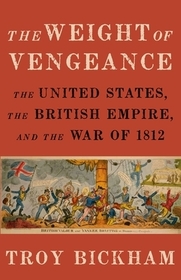
The Weight of Vengeance
The United States, the British Empire, and the War of 1812
-
10% KEDVEZMÉNY?
- A kedvezmény csak az 'Értesítés a kedvenc témákról' hírlevelünk címzettjeinek rendeléseire érvényes.
- Kiadói listaár GBP 35.99
-
16 249 Ft (15 475 Ft + 5% áfa)
Az ár azért becsült, mert a rendelés pillanatában nem lehet pontosan tudni, hogy a beérkezéskor milyen lesz a forint árfolyama az adott termék eredeti devizájához képest. Ha a forint romlana, kissé többet, ha javulna, kissé kevesebbet kell majd fizetnie.
- Kedvezmény(ek) 10% (cc. 1 625 Ft off)
- Kedvezményes ár 14 624 Ft (13 928 Ft + 5% áfa)
Iratkozzon fel most és részesüljön kedvezőbb árainkból!
Feliratkozom
16 249 Ft

Beszerezhetőség
Megrendelésre a kiadó utánnyomja a könyvet. Rendelhető, de a szokásosnál kicsit lassabban érkezik meg.
Why don't you give exact delivery time?
A beszerzés időigényét az eddigi tapasztalatokra alapozva adjuk meg. Azért becsült, mert a terméket külföldről hozzuk be, így a kiadó kiszolgálásának pillanatnyi gyorsaságától is függ. A megadottnál gyorsabb és lassabb szállítás is elképzelhető, de mindent megteszünk, hogy Ön a lehető leghamarabb jusson hozzá a termékhez.
A termék adatai:
- Kiadó OUP USA
- Megjelenés dátuma 2017. április 13.
- ISBN 9780190217815
- Kötéstípus Puhakötés
- Terjedelem344 oldal
- Méret 226x145x25 mm
- Súly 454 g
- Nyelv angol
- Illusztrációk 27 illus. 0
Kategóriák
Rövid leírás:
By placing the War of 1812 in a global context, Troy Bickham narrates America's bid for postcolonial sovereignty and Britain's attempt to block it, a conflict that put the fate of North America and Britain's global supremacy on the line.
TöbbHosszú leírás:
In early 1815, Secretary of State James Monroe reviewed the treaty with Britain that would end the War of 1812. The United States Navy was blockaded in port; much of the army had not been paid for nearly a year; the capital had been burned. The treaty offered an unexpected escape from disaster. Yet it incensed Monroe, for the name of Great Britain and its negotiators consistently appeared before those of the United States. "The United States have acquired a certain rank amongst nations, which is due to their population and political importance," he brazenly scolded the British diplomat who conveyed the treaty, "and they do not stand in the same situation as at former periods."
Monroe had a point, writes Troy Bickham. In The Weight of Vengeance, Bickham provides a provocative new account of America's forgotten war, underscoring its significance for both sides by placing it in global context. The Napoleonic Wars profoundly disrupted the global order, from India to Haiti to New Orleans. Spain's power slipped, allowing the United States to target the Floridas; the Haitian slave revolt contributed to the Louisiana Purchase; fears that Britain would ally with Tecumseh and disrupt the American northwest led to a pre-emptive strike on his people in 1811. This shifting balance of power provided the United States with the opportunity to challenge Britain's dominance of the Atlantic world. And it was an important conflict for Britain as well. Powerful elements in the British Empire so feared the rise of its former colonies that the British government sought to use the War of 1812 to curtail America's increasing maritime power and its aggressive territorial expansion. And by late 1814, Britain had more men under arms in North America than it had in the Peninsular War against Napoleon, with the war with America costing about as much as its huge subsidies to European allies.
Troy Bickham has given us an authoritative, lucidly written global account that transforms our understanding of this pivotal war.
A well-researched work, Bickham's book places the conflict in a transatlantic framework, comparing and contrasting British and American motivations, attitudes, and perceptions.
Tartalomjegyzék:
Note on terms
Acknowledgments
Introduction
1 The American Case for War
2 The British Empire's Case for War
3 Declaring War
4 America on the Offensive
5 The British Empire at War
6 Wartime Opposition in the United States
7 British Opposition to the War
8 Ending the War and Constructing the Peace
Conclusion: Who Won the War of 1812?
Abbreviations
Notes
Index

