

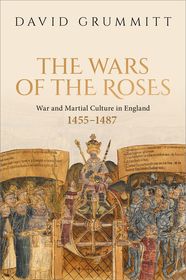
The Wars of the Roses
War and Martial Culture in England, 1455–1487
-
10% KEDVEZMÉNY?
- A kedvezmény csak az 'Értesítés a kedvenc témákról' hírlevelünk címzettjeinek rendeléseire érvényes.
- Kiadói listaár GBP 84.00
-
37 926 Ft (36 120 Ft + 5% áfa)
Az ár azért becsült, mert a rendelés pillanatában nem lehet pontosan tudni, hogy a beérkezéskor milyen lesz a forint árfolyama az adott termék eredeti devizájához képest. Ha a forint romlana, kissé többet, ha javulna, kissé kevesebbet kell majd fizetnie.
- Kedvezmény(ek) 10% (cc. 3 793 Ft off)
- Kedvezményes ár 34 133 Ft (32 508 Ft + 5% áfa)
Iratkozzon fel most és részesüljön kedvezőbb árainkból!
Feliratkozom
37 926 Ft

Beszerezhetőség
Megrendelésre a kiadó utánnyomja a könyvet. Rendelhető, de a szokásosnál kicsit lassabban érkezik meg.
Why don't you give exact delivery time?
A beszerzés időigényét az eddigi tapasztalatokra alapozva adjuk meg. Azért becsült, mert a terméket külföldről hozzuk be, így a kiadó kiszolgálásának pillanatnyi gyorsaságától is függ. A megadottnál gyorsabb és lassabb szállítás is elképzelhető, de mindent megteszünk, hogy Ön a lehető leghamarabb jusson hozzá a termékhez.
A termék adatai:
- Kiadó OUP Oxford
- Megjelenés dátuma 2025. július 24.
- ISBN 9780198958918
- Kötéstípus Keménykötés
- Terjedelem288 oldal
- Méret 240x160x24 mm
- Súly 588 g
- Nyelv angol 623
Kategóriák
Rövid leírás:
This book offers a fresh perspective on the series of rebellions against royal authority in England between 1455 and 1487, collectively known as the Wars of the Roses. It reassesses fundamental questions of military history, such as the size of armies, the extent of conflict, and the weapons and tactics employed.
TöbbHosszú leírás:
The series of rebellions against royal authority and the violent clashes between aristocratic families that occurred in England between 1455 and 1487 have long been characterized as the 'Wars of the Roses'. Yet, far from being a continuous period of civil war, the Wars of the Roses were in fact an intermittent series of minor clashes, pitched battles, and sieges. These occurred against the backdrop of a demilitarization of the English aristocracy in the final years of the Hundred Years War.
Drawing on extensive archival research and a wide-ranging synthesis of the secondary literature, David Grummitt here reconsiders the nature of war and the martial culture of the English in the second half of the fifteenth century. He places these experiences within the peculiar legal, constitutional, and political culture of late Lancastrian and Yorkist England, to reexamine in depth the motivation for fighting, the raising and equipping of armies, the experience of battle and its aftermath, and the ways in which civil conflict was rationalized and memorialized. These experiences are compared and contrasted to that in its continental neighbours in an age of expanding royal authority, gunpowder weapons, and emergence of standing, professional armies. The book's conclusions offer a new interpretation of the evidence for the size of armies and scale of conflict during these years, the weaponry and tactics employed, and the wider importance of war, chivalry, and martial culture in late medieval England.
In so doing, and by drawing on a range of new conceptual approaches in the fields of the history of emotions, material culture, and conflict archaeology, alongside other more traditional disciplinary approaches to military history, the book offers a thorough and fulsome history of the Wars of the Roses, one that properly integrates war and marital culture into our understanding of the political and cultural history of fifteenth-century England, and late medieval European military history more generally.
Grummitt is currently writing a three-volume military history of the Wars of the Roses and his recent piece on the battle of Wakefield is available on the Battlefields Trust website. Part of the strength of his work derives from the scholarly scepticism he displays toward the sources, notably the chronicles, on questions such as the size of armies. Battlefield archaeology is also used with due scepticism.
Tartalomjegyzék:
Fifteenth-Century England: A Society Structured for War
The Wars of the Roses: Treason, Rebellion and Civil War
The Logistics of War: Armies and Weapons
The Practicalities of War: Training, Strategy and Preparation for Battle
The Experience of War: Tactics and Battle
The Aftermath of War: Death, Profit and Loss
The Legacy of War: Memorialization and History
Conclusion. An English Way of War?

