

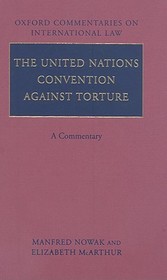
The United Nations Convention Against Torture
A Commentary
Sorozatcím: Oxford Commentaries on International Law;
-
10% KEDVEZMÉNY?
- A kedvezmény csak az 'Értesítés a kedvenc témákról' hírlevelünk címzettjeinek rendeléseire érvényes.
- Kiadói listaár GBP 250.00
-
112 875 Ft (107 500 Ft + 5% áfa)
Az ár azért becsült, mert a rendelés pillanatában nem lehet pontosan tudni, hogy a beérkezéskor milyen lesz a forint árfolyama az adott termék eredeti devizájához képest. Ha a forint romlana, kissé többet, ha javulna, kissé kevesebbet kell majd fizetnie.
- Kedvezmény(ek) 10% (cc. 11 288 Ft off)
- Kedvezményes ár 101 588 Ft (96 750 Ft + 5% áfa)
Iratkozzon fel most és részesüljön kedvezőbb árainkból!
Feliratkozom
112 875 Ft

Beszerezhetőség
Bizonytalan a beszerezhetőség. Érdemes még egyszer keresni szerzővel és címmel. Ha nem talál másik, kapható kiadást, forduljon ügyfélszolgálatunkhoz!
Why don't you give exact delivery time?
A beszerzés időigényét az eddigi tapasztalatokra alapozva adjuk meg. Azért becsült, mert a terméket külföldről hozzuk be, így a kiadó kiszolgálásának pillanatnyi gyorsaságától is függ. A megadottnál gyorsabb és lassabb szállítás is elképzelhető, de mindent megteszünk, hogy Ön a lehető leghamarabb jusson hozzá a termékhez.
A termék adatai:
- Kiadó Oxford University Press
- Megjelenés dátuma 2008. április 7.
- ISBN 9780199280001
- Kötéstípus Keménykötés
- Terjedelem1680 oldal
- Méret 243xx mm
- Súly 1980 g
- Nyelv angol 0
Kategóriák
Rövid leírás:
This book explores the definition of torture in the United Nations Convention Against Torture, the obligations of States parties and provisions for international monitoring. Full commentary provides historical context and thorough analysis of case-law and practice from monitoring bodies and international, regional, and domestic courts.
TöbbHosszú leírás:
The prohibition of torture - the right to physical and mental integrity - is guaranteed in the strongest terms under international law. It is protected as an absolute right, non-derogable even in times of war or public emergency under many human rights treaties and is also generally accepted as a part of customary international law and even ius cogens.
The problem of torture resurfaced in the second half of the 20th century, and more recently in the contexts of the war in Iraq, the situation of detainees in Guantanamo Bay, and of attempts to extradite persons considered to be 'threats to national security' to States where they may be at risk of torture.
The main instrument to combat torture within the framework of the United Nations is the Convention Against Torture and other Cruel, Inhuman, or Degrading Treatment or Punishment (CAT). It is one of the few human rights treaties which makes explicit use of the criminal law in order to prevent and eradicate violations - the main obligation of Sates parties to the CAT is to ensure that all acts of torture are offences under domestic criminal law and that punishments are appropriate to the grave
nature of such crimes. The CAT even goes beyond the traditional principles of territorial and personal jurisdiction and for the first time applies the principle of universal jurisdiction under a human rights treaty.
This volume explores the problematic definition of torture in the Convention, the substantive obligations of States parties, the principle of 'non-refoulement', provisions for international monitoring, and also the concept of preventative visits to all places of detention as contained in the Optional Protocol to the CAT. It also covers issues including the distinction between torture and cruel inhuman or degrading treatment and the principle of non-admissibility of evidence extracted under
torture. Full article by article commentary on the Convention also provides historical context and thorough analysis of case-law and practice from international and regional courts and monitoring bodies. Relevant case-law from domestic courts (such as that of the House of Lords in the Pinochet case) and
the practices of domestic prison inspection panels are also discussed.
A work like this was long overdue...Both volumes consist of careful, up-to-date and comprehensive, article-by-article, consideration of the relevant normative texts and ensuing practice, and thus recommend themselves as indispensable for both academic international lawyers and for practitioners, whether at public service or in private practice. Alexander Orakhelashvili, European Journal of International Law, 2009

