

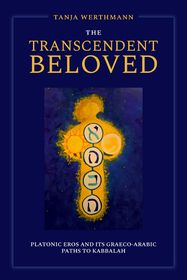
The Transcendent Beloved
Platonic Eros and Its Graeco-Arabic Paths to Kabbalah
-
10% KEDVEZMÉNY?
- A kedvezmény csak az 'Értesítés a kedvenc témákról' hírlevelünk címzettjeinek rendeléseire érvényes.
- Kiadói listaár GBP 91.00
-
41 086 Ft (39 130 Ft + 5% áfa)
Az ár azért becsült, mert a rendelés pillanatában nem lehet pontosan tudni, hogy a beérkezéskor milyen lesz a forint árfolyama az adott termék eredeti devizájához képest. Ha a forint romlana, kissé többet, ha javulna, kissé kevesebbet kell majd fizetnie.
- Kedvezmény(ek) 10% (cc. 4 109 Ft off)
- Kedvezményes ár 36 978 Ft (35 217 Ft + 5% áfa)
Iratkozzon fel most és részesüljön kedvezőbb árainkból!
Feliratkozom
41 086 Ft

Beszerezhetőség
Még nem jelent meg, de rendelhető. A megjelenéstől számított néhány héten belül megérkezik.
Why don't you give exact delivery time?
A beszerzés időigényét az eddigi tapasztalatokra alapozva adjuk meg. Azért becsült, mert a terméket külföldről hozzuk be, így a kiadó kiszolgálásának pillanatnyi gyorsaságától is függ. A megadottnál gyorsabb és lassabb szállítás is elképzelhető, de mindent megteszünk, hogy Ön a lehető leghamarabb jusson hozzá a termékhez.
A termék adatai:
- Kiadó OUP USA
- Megjelenés dátuma 2026. június 24.
- ISBN 9780197842775
- Kötéstípus Keménykötés
- Terjedelem368 oldal
- Méret 212x149x34 mm
- Súly 472 g
- Nyelv angol 700
Kategóriák
Rövid leírás:
Tanja Werthmann's The Transcendent Beloved traces the course of Platonic and Neoplatonic notions of eros as they shaped major patterns in medieval Islamic and Jewish thought. It shows the impact of the ancient Greek heritage on Arabic and Hebrew sources, culminating in their profound expression in the Zohar, the major thirteenth-century work of Jewish mysticism. Werthmann provides vivid textual examples to illustrate that classical philosophical concepts played a central role in the formulation of kabbalistic traditions. This book thus sets love in Jewish mysticism against the background of the vast Arabic literature on love--its immediate historical precedent. Werthmann showcases the rich dialogue between Greek, Arabic, and Latin religious traditions, offering a sensitive decoding of the metaphysics of Jewish mystical literature.
TöbbHosszú leírás:
Platonism and Kabbalah share a prominent characteristic: the formulation of epistemological and ontological concepts in erotic terms. Plato envisions eros as creating and sustaining the permeability of the boundaries between the earthly and the divine. This motif accompanies the theme of love in philosophical and mystical writings from Antiquity to the Middle Ages, presupposing that true love always points to its divine, transcendent source. The exuberant religious language of Plato's eros, carried on by Plotinus, facilitates its adoption into Islamic and Jewish devotional systems.
The Transcendent Beloved traces the course of Platonic and Neoplatonic concepts of eros as they shaped major patterns in medieval Islamic and Jewish thought. It shows the impact of the ancient Greek heritage on Arabic and Hebrew writings, culminating in the profound expression of the language of eros in the Zohar, the pre-eminent work of Jewish mysticism. Tanja Werthmann's study thus positions the rise of medieval Jewish mysticism in the context of medieval Jewish and Islamic philosophy, which are viewed here as a continuum. She sets the notions of love in Kabbalah against the background of their immediate historical precedents: the devotional and ontological formulations of love in Jewish philosophical writings and in the vast literature on love in Arabic. Werthmann showcases the rich dialogue between Greek, Islamic, Jewish and Christian traditions, thus offering a new and more sensitive decoding of kabbalistic metaphysics.
Tartalomjegyzék:
Metamorphoses of Platonic Eros
Part I. Eros from Plato to the Zohar
Eros in Plato and Plotinus
From Eros to --Ishq
Love in Medieval Jewish Philosophy
Love of God in Moses de Le--n's Book of the Pomegranate and in the Zohar
Part II. Metaphysics of Eros and Reciprocity: Zoharic Images and Their Background
Images of Gendered Ontology
The Kiss as Image of Love and Reciprocity

