

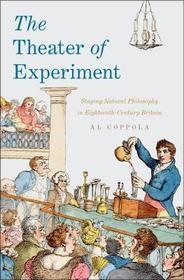
The Theater of Experiment
Staging Natural Philosophy in Eighteenth-Century Britain
-
10% KEDVEZMÉNY?
- A kedvezmény csak az 'Értesítés a kedvenc témákról' hírlevelünk címzettjeinek rendeléseire érvényes.
- Kiadói listaár GBP 102.50
-
46 278 Ft (44 075 Ft + 5% áfa)
Az ár azért becsült, mert a rendelés pillanatában nem lehet pontosan tudni, hogy a beérkezéskor milyen lesz a forint árfolyama az adott termék eredeti devizájához képest. Ha a forint romlana, kissé többet, ha javulna, kissé kevesebbet kell majd fizetnie.
- Kedvezmény(ek) 10% (cc. 4 628 Ft off)
- Kedvezményes ár 41 651 Ft (39 668 Ft + 5% áfa)
Iratkozzon fel most és részesüljön kedvezőbb árainkból!
Feliratkozom
46 278 Ft

Beszerezhetőség
Becsült beszerzési idő: A Prosperónál jelenleg nincsen raktáron, de a kiadónál igen. Beszerzés kb. 3-5 hét..
A Prosperónál jelenleg nincsen raktáron.
Why don't you give exact delivery time?
A beszerzés időigényét az eddigi tapasztalatokra alapozva adjuk meg. Azért becsült, mert a terméket külföldről hozzuk be, így a kiadó kiszolgálásának pillanatnyi gyorsaságától is függ. A megadottnál gyorsabb és lassabb szállítás is elképzelhető, de mindent megteszünk, hogy Ön a lehető leghamarabb jusson hozzá a termékhez.
A termék adatai:
- Kiadó OUP USA
- Megjelenés dátuma 2016. október 6.
- ISBN 9780190269715
- Kötéstípus Keménykötés
- Terjedelem278 oldal
- Méret 236x155x22 mm
- Súly 544 g
- Nyelv angol
- Illusztrációk 13 illus. 0
Kategóriák
Rövid leírás:
The Theater of Experiment explores the crucial role of spectacle in the establishment of modern science. It analyzes eighteenth-century theatrical representations of science in order to demonstrate how experimental natural philosophy was itself a kind of performing art that was shaped by a wider culture of spectacle in the Enlightenment.
TöbbHosszú leírás:
The first book-length study of the relationship between science and theater during the long eighteenth century in Britain, The Theater of Experiment explores the crucial role of spectacle in the establishment of modern science by analyzing how eighteenth-century science was "staged" in a double sense. On the one hand, this study analyzes science in performance: the way that science and scientists were made a public spectacle in comedies, farces, and pantomimes for purposes that could range from the satiric to the pedagogic to the hagiographic. But this book also considers the way in which these plays laid bare science as performance: that is, the way that eighteenth-century science was itself a kind of performing art, subject to regimes of stagecraft that traversed the laboratory, the lecture hall, the anatomy theater, and the public stage. Not only did the representation of natural philosophy in eighteenth-century plays like Thomas Shadwell's Virtuoso, Aphra Behn's The Emperor of the Moon, Susanna Centlivre's The Basset Table, and John Rich's Necromancer, or Harelequin Doctor Faustus, influence contemporary debates over the role that experimental science was to play public life, the theater shaped the very form that science itself was to take. By disciplining, and ultimately helping to legitimate, experimental philosophy, the eighteenth-century stage helped to naturalize an epistemology based on self-evident, decontextualized facts that might speak for themselves. In this, the stage and the lab jointly fostered an Enlightenment culture of spectacle that transformed the conditions necessary for the production and dissemination of scientific knowledge. Precisely because Enlightenment public science initiatives, taking their cue from the public stages, came to embrace the stagecraft and spectacle that Restoration natural philosophy sought to repress from the scene of experimental knowledge production, eighteenth-century science organized itself around not the sober, masculine "modest witness" of experiment but the sentimental, feminized, eager observer of scientific performance.
Coppola's deeply researched book brings to the table subtle readings of theatrical texts that historians of science have not previously considered relevant to their domain. For this, all scholars of the period should be grateful. ...Al Coppola has inspired a new round of research in this field and exemplified the best that can be hoped for in terms of its quality.
Tartalomjegyzék:
Introduction
Science as Performance; Science in Performance
Against the Virtuosi
A Matter of Concern
Prologue: ---Bare Unfinish'd Histories---: The Rehearsal of Natural Philosophy
Buckingham amid the Virtuosi
Bacon, Dryden, Sprat and the Labyrinth of Induction
1. The Spectacle of Experiment and the Politics of Virtuoso Satire in the 1670s
The Modest Witness as Eager Spectator: Boyle in the Theater of Experiment
The Virtuoso Discovered: Shadwell, Hooke and the Royal Society
The Virtuoso Beyond Science: Bad Men and Bad Manners
The Virtuoso as Reactionary: D'Urfey's Madam Fickle
Virtuoso Satire and the Purification of Natural Philosophy
2. Retraining the Virtuoso's Gaze: The Emperor of the Moon and the
Spectacles of Science and Politics
The Virtuoso's Gaze Reformed: Tory Politics and Natural Philosophy
---Hold Doting Fool, put on your Spectacles---: The Show of Politics in the 1680s
Spectacle against Enthusiasm: Behn's Emperor and the Exclusion Crisis
Dryden's Albion to the Moon: Political and Theatrical Pressures in 1687
3. Physiology, Commerce and Comedy: Three Hours after Marriage and
A Bold Stroke for a Wife
The Virtuoso Vindicated
From the Old Physiology to the New Psychology
Soft Comedy and Whig Science
Scriblerian Lampoon as Humoral Purge
Centlivre's Humorous Circulation
4. Harlequin Newton: Faustus Pantomimes and Public Science in the 1720s
---To Gaze Surpriz'd---: The Panorama of Science, Magic and Pantomime
---Surprizing Phaenomena--- and the Attraction of Popular Newtonianism
---One Wide Conflagration---: The Pleasures of Harlequin Faustus
Defoe, Conjuring and the Science of the Pantomimes
The Force Field of Public Science
5. Modest Witnesses and Eager Spectators: Engendering Enlightenment
Science
---This Woman-hood of Yours Seems to be Mightily in the Way
Appropriating Moliere's Learned Ladies
Cibber, Centlivre and The Vanishing Virtuosa
Enlightenment Periodicals and Science ---for the Ladies---
Embodying the Eager Spectator
Epilogue: Rehearsing Spectacle
From Spectacles to Spectators
Reflexive Empiricism and Fielding's Spectators
Bibliography

