

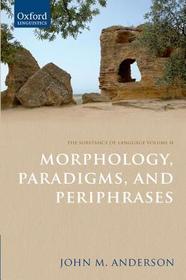
The Substance of Language Volume II: Morphology, Paradigms, and Periphrases
-
10% KEDVEZMÉNY?
- A kedvezmény csak az 'Értesítés a kedvenc témákról' hírlevelünk címzettjeinek rendeléseire érvényes.
- Kiadói listaár GBP 145.00
-
69 273 Ft (65 975 Ft + 5% áfa)
Az ár azért becsült, mert a rendelés pillanatában nem lehet pontosan tudni, hogy a beérkezéskor milyen lesz a forint árfolyama az adott termék eredeti devizájához képest. Ha a forint romlana, kissé többet, ha javulna, kissé kevesebbet kell majd fizetnie.
- Kedvezmény(ek) 10% (cc. 6 927 Ft off)
- Kedvezményes ár 62 346 Ft (59 378 Ft + 5% áfa)
Iratkozzon fel most és részesüljön kedvezőbb árainkból!
Feliratkozom
69 273 Ft

Beszerezhetőség
Megrendelésre a kiadó utánnyomja a könyvet. Rendelhető, de a szokásosnál kicsit lassabban érkezik meg.
Why don't you give exact delivery time?
A beszerzés időigényét az eddigi tapasztalatokra alapozva adjuk meg. Azért becsült, mert a terméket külföldről hozzuk be, így a kiadó kiszolgálásának pillanatnyi gyorsaságától is függ. A megadottnál gyorsabb és lassabb szállítás is elképzelhető, de mindent megteszünk, hogy Ön a lehető leghamarabb jusson hozzá a termékhez.
A termék adatai:
- Kiadás sorszáma és címe :Morphology, Paradigms, and Periphrases
- Kiadó OUP Oxford
- Megjelenés dátuma 2011. október 20.
- ISBN 9780199608324
- Kötéstípus Keménykötés
- Terjedelem352 oldal
- Méret 240x163x26 mm
- Súly 692 g
- Nyelv angol 0
Kategóriák
Rövid leírás:
Morphology, Paradigms, and Periphrases is concerned with the role of the lexicon, in particular its inflectional morphology, in mediating between syntax and phonology. It examines the expressive role of inflection and the notion of grammatical periphrasis and what these reveal about the substantive differences between verbs and nouns.
TöbbHosszú leírás:
The Substance of Language
Volume I: The Domain of Syntax
Volume II: Morphology Paradigms, and Periphrases
Volume III: Phonology-Syntax Analogies
John M. Anderson
The three volumes of The Substance of Language collectively overhaul linguistic theory from phonology to semantics and syntax to pragmatics and offer a full account of how the form/function relationship works in language. Each explores the consequences for the investigation of language of a conviction that all aspects of linguistic structure are grounded in the non-linguistic mental faculties on which language imposes its own structure. The first and third look at how syntax and phonology are fed by a lexical component that includes morphology and which unites representations in the two planes. The second examines the way morphology is embedded in the lexicon as part of the expression of the lexicon-internal relationships of words.
Morphology , Paradigms, and Periphrases is concerned with the role of the lexicon, in particular its inflectional morphology, in mediating between the substantively different categories of syntax and phonology. In the first part of the book Professor Anderson looks at the central role of the paradigm in reconciling the demands of syntactic categorization with the available means of expression. He examines the expressive role of inflection, illustrating his argument with Old English verb morphology. In the second part of the book the author pursues the notion of grammatical periphrasis. He starts out from its role as a solver of the problem of defective or incomplete paradigms and then compares it with other analytic expressions. He concludes with a discussion of why studies of grammatical periphrasis have focused on verbal constructions. He looks at the mechanism by which grammatical periphrases compensate for gaps in the finite verb paradigm and what this reveals about the substantive differences between verbs and nouns.
The many detailed proposals of John Anderson's fine trilogy are derived from an over-arching conception of the nature of linguistic knowledge that is in turn based on the grounding of syntax in semantics and the grounding of phonology in phonetics, both convincingly subsumed under the notion of cognitive salience. The Substance of Language is a major contribution to linguistic theory and the history of linguistic thought.
Tartalomjegyzék:
Interface
Part I: Inflectional Structure, and its Consequences
The Interfacing of Morphophonology and Morphosyntax
The Periphrastic Prototype
Part II: The Domain of Grammatical Periphrasis
Periphrases and Non-periphrases
Number and Case as non-nounal
Non-verbal Periphrasis?
Conclusion
References
Index

