

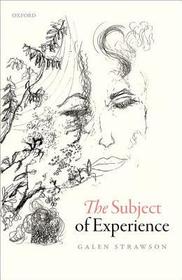
The Subject of Experience
-
10% KEDVEZMÉNY?
- A kedvezmény csak az 'Értesítés a kedvenc témákról' hírlevelünk címzettjeinek rendeléseire érvényes.
- Kiadói listaár GBP 78.00
-
35 217 Ft (33 540 Ft + 5% áfa)
Az ár azért becsült, mert a rendelés pillanatában nem lehet pontosan tudni, hogy a beérkezéskor milyen lesz a forint árfolyama az adott termék eredeti devizájához képest. Ha a forint romlana, kissé többet, ha javulna, kissé kevesebbet kell majd fizetnie.
- Kedvezmény(ek) 10% (kb. 3 522 Ft)
- Kedvezményes ár 31 695 Ft (30 186 Ft + 5% áfa)
Iratkozzon fel most és részesüljön kedvezőbb árainkból!
Feliratkozom
35 217 Ft

Beszerezhetőség
Megrendelésre a kiadó utánnyomja a könyvet. Rendelhető, de a szokásosnál kicsit lassabban érkezik meg.
Why don't you give exact delivery time?
A beszerzés időigényét az eddigi tapasztalatokra alapozva adjuk meg. Azért becsült, mert a terméket külföldről hozzuk be, így a kiadó kiszolgálásának pillanatnyi gyorsaságától is függ. A megadottnál gyorsabb és lassabb szállítás is elképzelhető, de mindent megteszünk, hogy Ön a lehető leghamarabb jusson hozzá a termékhez.
A termék adatai:
- Kiadó OUP Oxford
- Megjelenés dátuma 2017. január 26.
- ISBN 9780198777885
- Kötéstípus Keménykötés
- Terjedelem332 oldal
- Méret 242x161x23 mm
- Súly 634 g
- Nyelv angol 0
Kategóriák
Rövid leírás:
Does the self exist? If so, what is its nature? How long do selves last? Galen Strawson draws on literature and psychology as well as philosophy to discuss various ways we experience having or being a self. He argues that it is legitimate to say that there is such a thing as the self, distinct from the human being.
TöbbHosszú leírás:
The Subject of Experience is about the self, the person. It takes the form of a series of essays which draw on literature and psychology as well as philosophy. Galen Strawson discusses the phenomenology or experience of having or being a self (What is the character of self-experience?) and the fundamental metaphysics of the self (Does the self exist? If so, what is its nature? How long do selves last?): he develops an approach to the metaphysical questions out of the results of the phenomenological investigation. He argues that it is legitimate to say that there is such a thing as the self as distinct from the human being. At the same time he raises doubts about how long selves can be supposed to last, insofar as they are distinct from human beings. He also raises a doubt about whether a self (or indeed a human being) can really be said to lose anything in dying. He criticizes the popular notion of the narrative self, and considers the differences between 'Endurers' or 'Diachronic' people, who feel that they are the same person when they consider their past and future, and 'Transients' or 'Episodic' people, who do not feel this. He considers the first-person pronoun 'I' and a number of puzzles raised by the phenomena of self-reference and self-knowledge. He examines Locke's, Hume's and Kant's accounts of the mind and personal identity, and argues that Locke and Hume have been badly misunderstood.
[M]y summary certainly does fail to convey both the extraordinary richness (and density) of Strawson's discussion and the care he takes in expounding and clarifying his views. Reading these essays is an exciting, provoking and frequently educational experience. ... [These remarks] attest to how stimulating and enjoyable it is to engage with the original and invariably elegant essays in Strawson's book.
Tartalomjegyzék:
Introduction: 'The I, the I'
'The self'
The self and the sesmet
Against corporism
I have no future
'We live beyond any tale that we happen to enact'
The unstoried life
Self-intimation
Fundamental Singleness: how to turn the Second Paralogism into a valid argument
Radical self-awareness
I and I: immunity to error through misidentification of the subject
'The secrets of all hearts': Locke on personal identity
'When I enter most intimately into what I call myself': Hume on the mind
'All my hopes vanish': Hume on the mind

