

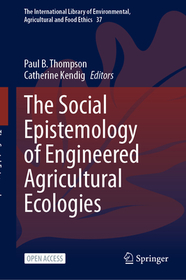
The Social Epistemology of Engineered Agricultural Ecologies
Sorozatcím: The International Library of Environmental, Agricultural and Food Ethics;
-
17% KEDVEZMÉNY?
- A kedvezmény csak az 'Értesítés a kedvenc témákról' hírlevelünk címzettjeinek rendeléseire érvényes.
- Kiadói listaár EUR 53.49
-
20 893 Ft (19 898 Ft + 5% áfa)
Az ár azért becsült, mert a rendelés pillanatában nem lehet pontosan tudni, hogy a beérkezéskor milyen lesz a forint árfolyama az adott termék eredeti devizájához képest. Ha a forint romlana, kissé többet, ha javulna, kissé kevesebbet kell majd fizetnie.
- Kedvezmény(ek) 12% (cc. 2 507 Ft off)
- Kedvezményes ár 18 386 Ft (17 510 Ft + 5% áfa)
- A kedvezmény érvényes eddig: 2026. augusztus 5.
Iratkozzon fel most és részesüljön kedvezőbb árainkból!
Feliratkozom
18 386 Ft

Beszerezhetőség
Megrendelésre a kiadó utánnyomja a könyvet. Rendelhető, de a szokásosnál kicsit lassabban érkezik meg.
Why don't you give exact delivery time?
A beszerzés időigényét az eddigi tapasztalatokra alapozva adjuk meg. Azért becsült, mert a terméket külföldről hozzuk be, így a kiadó kiszolgálásának pillanatnyi gyorsaságától is függ. A megadottnál gyorsabb és lassabb szállítás is elképzelhető, de mindent megteszünk, hogy Ön a lehető leghamarabb jusson hozzá a termékhez.
A termék adatai:
- Kiadó Springer Nature Switzerland
- Megjelenés dátuma 2025. augusztus 30.
- ISBN 9783032044495
- Kötéstípus Keménykötés
- Terjedelem152 oldal
- Méret 235x155 mm
- Nyelv angol
- Illusztrációk XIII, 152 p. 9 illus. 718
Kategóriák
Hosszú leírás:
"
This open access collection of new interdisciplinary essays discusses philosophical and social implications of new biotechnologies, methods, and tools used in agriculture from a multispecies perspective. Contributors employ philosophy, sociology, and history of agriculture; agricultural ethics; philosophy of science; and science and technology studies to investigate agricultural research, farming practice, and agricultural policy. Chapters explore and critically discuss how mechanical, chemical, and genetic interventions reshape ecological relationships and agricultural knowledge by relying on case studies of interspecies interactions across different agriculturalized landscapes. These include careful examinations of the nature of dynamic causal relationships across microbial, macrobial, megaflora and faunal organismal communities; exploration of specific coevolved species of pollinators and field crops; and analyses of the epistemic and normative commitments that guide crop management decisions and shape methodological choices leading to the reengineering of land use. These analyses and case studies are intended to provide readers with a variety of conceptual tools through which the use of agricultural technologies might possibly be understood and debated.
" TöbbTartalomjegyzék:
"
Chapter 1: Introduction: Technological innovations in agriculture: a philosophy and sociology of science approach.- Chapter 2: What is soil, and what is it for? Social ontologies and social epistemologies of soil affordances and soil experiments.- Chapter 3:Dreaming the Butterfly: Engineered Ecologies and Fragile Futures.- Chapter 4: Agency and Relationships in Engineered Agricultural Ecologies.- Chapter 5: Treading Lightly, Agriculture, and Focality.- Chapter 6: Reframing Gene Editing in Crops: Unpacking Potential Solutions by Reconsidering the Questions Asked.- Chapter 7: Unpacking public engagement in agricultural biotechnology: the role of narratives and social epistemology in a deliberative workshop on gene editing in agriculture and food.- Chapter 8: A Risk-Based Agricultural Biotechnology Ethics in the Era of Gene Editing: What is New and What Is Not.
" Több
