

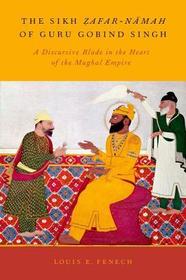
The Sikh Zafar-namah of Guru Gobind Singh
A Discursive Blade in the Heart of the Mughal Empire
-
10% KEDVEZMÉNY?
- A kedvezmény csak az 'Értesítés a kedvenc témákról' hírlevelünk címzettjeinek rendeléseire érvényes.
- Kiadói listaár GBP 67.00
-
30 250 Ft (28 810 Ft + 5% áfa)
Az ár azért becsült, mert a rendelés pillanatában nem lehet pontosan tudni, hogy a beérkezéskor milyen lesz a forint árfolyama az adott termék eredeti devizájához képest. Ha a forint romlana, kissé többet, ha javulna, kissé kevesebbet kell majd fizetnie.
- Kedvezmény(ek) 10% (cc. 3 025 Ft off)
- Kedvezményes ár 27 225 Ft (25 929 Ft + 5% áfa)
Iratkozzon fel most és részesüljön kedvezőbb árainkból!
Feliratkozom
30 250 Ft

Beszerezhetőség
Megrendelésre a kiadó utánnyomja a könyvet. Rendelhető, de a szokásosnál kicsit lassabban érkezik meg.
Why don't you give exact delivery time?
A beszerzés időigényét az eddigi tapasztalatokra alapozva adjuk meg. Azért becsült, mert a terméket külföldről hozzuk be, így a kiadó kiszolgálásának pillanatnyi gyorsaságától is függ. A megadottnál gyorsabb és lassabb szállítás is elképzelhető, de mindent megteszünk, hogy Ön a lehető leghamarabb jusson hozzá a termékhez.
A termék adatai:
- Kiadó OUP USA
- Megjelenés dátuma 2013. január 31.
- ISBN 9780199931453
- Kötéstípus Puhakötés
- Terjedelem336 oldal
- Méret 155x234x27 mm
- Súly 442 g
- Nyelv angol 0
Kategóriák
Rövid leírás:
Louis E. Fenech offers a compelling new examination of one of the only Persian compositions attributed to the tenth Sikh Guru, Guru Gobind Singh (1666-1708): the Zafar-namah or 'Epistle of Victory.'
TöbbHosszú leírás:
Louis E. Fenech offers a compelling new examination of one of the only Persian compositions attributed to the tenth Sikh Guru, Guru Gobind Singh (1666-1708): the Zafar-namah or 'Epistle of Victory.' Written as a masnavi, a Persian poem, this letter was originally sent to the Mughal emperor Aurangzeb (d. 1707) rebuking his most unbecoming conduct. Incredibly, Guru Gobind Singh's letter is included today within the Sikh canon, one of only a very small handful of Persian-language texts granted the status of Sikh scripture. As such, its contents are sung on special Sikh occasions. Perhaps equally surprising is the fact that the letter appears in the tenth Guru's book or the Dasam Granth in the standard Gurmukhi script (in which Punjabi is written) but retains its original Persian language, a vernacular few Sikhs know.
Drawing out the letter's direct and subtle references to the Iranian national epic, the Shah-namah, and to Shaikh Sa'di's thirteenth-century Bustan, Fenech demonstrates how this letter served as a form of Indo-Islamic verbal warfare, ensuring the tenth Guru's moral and symbolic victory over the legendary and powerful Mughal empire. Through analysis of the Zafar-namah, Fenech resurrects an essential and intiguing component of the Sikh tradition: its Islamicate aspect.
The Zafarnama is one of the most fascinating and unusual of early Sikh texts ... French's fine monograph is the first approach to this particularly interesting text to aim to do proper justice, not just to the immediate setting of its contents, but also to the richness of the broader cultural and literary context in which it was produced.
Tartalomjegyzék:
Introduction
Chapter 1: Diplomacy at the Court of Guru Gobind Singh
Chapter 2: Zafar-Namah, Fath-Namah, Hikayats, and the Dasam Granth
Chapter 3: The Text of the Zafar-Namah: Guru Gobind Singh, Ferdausi, and Saúdi
Chatper 4: Authorship
Chapter 5: The Sikh Shah-Namah of Guru Gobind Singh
Chapter 6: The Historiography Of The Zafar-namah
Conclusion
Glossary
Bibliography

