

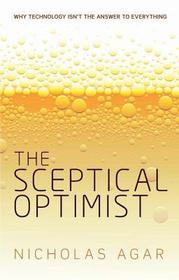
The Sceptical Optimist
Why technology isn't the answer to everything
-
10% KEDVEZMÉNY?
- A kedvezmény csak az 'Értesítés a kedvenc témákról' hírlevelünk címzettjeinek rendeléseire érvényes.
- Kiadói listaár GBP 21.99
-
9 928 Ft (9 455 Ft + 5% áfa)
Az ár azért becsült, mert a rendelés pillanatában nem lehet pontosan tudni, hogy a beérkezéskor milyen lesz a forint árfolyama az adott termék eredeti devizájához képest. Ha a forint romlana, kissé többet, ha javulna, kissé kevesebbet kell majd fizetnie.
- Kedvezmény(ek) 10% (cc. 993 Ft off)
- Kedvezményes ár 8 935 Ft (8 510 Ft + 5% áfa)
Iratkozzon fel most és részesüljön kedvezőbb árainkból!
Feliratkozom
9 928 Ft

Beszerezhetőség
Megrendelésre a kiadó utánnyomja a könyvet. Rendelhető, de a szokásosnál kicsit lassabban érkezik meg.
Why don't you give exact delivery time?
A beszerzés időigényét az eddigi tapasztalatokra alapozva adjuk meg. Azért becsült, mert a terméket külföldről hozzuk be, így a kiadó kiszolgálásának pillanatnyi gyorsaságától is függ. A megadottnál gyorsabb és lassabb szállítás is elképzelhető, de mindent megteszünk, hogy Ön a lehető leghamarabb jusson hozzá a termékhez.
A termék adatai:
- Kiadó OUP Oxford
- Megjelenés dátuma 2015. július 9.
- ISBN 9780198717058
- Kötéstípus Keménykötés
- Terjedelem222 oldal
- Méret 222x150x23 mm
- Súly 386 g
- Nyelv angol 0
Kategóriák
Rövid leírás:
In The Paradox of Progress, Nicholas Agar challenges the central claims of 'radical optimism': that technological progress will automatically make us happier and healthier. Using recent psychological studies about human well-being, he instead presents a more realistic approach to understand the positive and negative issues that progress brings.
TöbbHosszú leírás:
The rapid developments in technologies -- especially computing and the advent of many 'smart' devices, as well as rapid and perpetual communication via the Internet -- has led to a frequently voiced view which Nicholas Agar describes as 'radical optimism'. Radical optimists claim that accelerating technical progress will soon end poverty, disease, and ignorance, and improve our happiness and well-being. Agar disputes the claim that technological progress will automatically produce great improvements in subjective well-being. He argues that radical optimism 'assigns to technological progress an undeserved pre-eminence among all the goals pursued by our civilization'.
Instead, Agar uses the most recent psychological studies about human perceptions of well-being to create a realistic model of the impact technology will have. Although he accepts that technological advance does produce benefits, he insists that these are significantly less than those proposed by the radical optimists, and aspects of such progress can also pose a threat to values such as social justice and our relationship with nature, while problems such as poverty cannot be understood in technological terms. He concludes by arguing that a more realistic assessment of the benefits that technological advance can bring will allow us to better manage its risks in future.
eloquent and well-informed book ... a refreshing corrective to the excesses of technological optimism
Tartalomjegyzék:
Introduction
Radical optimism and the technology bias
Is there a law of technological progress?
Does technological progress make us happier?
The new paradox of progress
We need technological progress experiments
Why technological progress won't end poverty
Choosing a tempo of technological progress
Afterword: Don't turn well-being technologies into Procrustean beds
References
Index

